

▸Table of Contents
- 1Why a Cheap Quote Is Really a Deferred Invoice
- 2Trick 1: High-Impurity Recycled Cullet
- 3Trick 2: Shortened Annealing and Trapped Glass Bottle Thermal Stress
- 4Trick 3: Skipped Optical and Light Inspection
- 5When Glass Bottle Manufacturing Defects Reach Your Filling Line
- 6Bottle Finish Tolerance and Ocean Freight Leakage
- 7Glass Bottle Quote Comparison That Actually Protects You
- 8From Unit Price to Total Cost of Ownership
- 9FAQ
- 10Conclusion
A low quote feels like a win. However, it often only moves the cost to a place you cannot see yet, such as your filling line, your freight container, or your customer’s complaint inbox. Therefore, this guide looks behind the price tag of cheap glass bottles and shows where the money really goes. Moreover, we explain why a serious custom glass bottle supplier should be judged on total cost of ownership rather than on unit price alone. Consequently, you can spot a risky bid before it becomes an expensive lesson.
Why a Cheap Quote Is Really a Deferred Invoice
Most buyers compare bids on one line: price per bottle. In contrast, the real cost of a glass bottle is spread over many steps, from the furnace to the warehouse of your customer. For this reason, a bid that is ten percent lower can still be far more expensive overall once you add cull rates, line stops, leakage claims and freight losses.
Specifically, cheap factories rarely cut their own profit. Instead, they cut cost from three places that you cannot see in a sample photo. Furthermore, those three short cuts are the root of most glass bottle manufacturing defects that reach the market.
| Short cut behind a low bid | What the factory saves | What you pay later |
|---|---|---|
| Higher share of low-grade recycled cullet | Raw material cost | Poor clarity, bubbles, weaker body, higher breakage |
| Shorter annealing and fast cooling | Energy and line time | Trapped stress, cracking, thermal shock failures |
| Reduced optical and light inspection | Labor and machine time | Missed defects ship to your line and to your customer |
Trick 1: High-Impurity Recycled Cullet
Recycled glass, or cullet, is a normal part of glass making. However, the quality of that cullet matters a lot. When a factory leans on low-grade cullet with high impurity levels, several problems follow at once.
Initially, the melt carries more unmelted particles, so you see stones, seeds and bubbles in the finished bottle. In addition, the color drifts from batch to batch, which looks cheap on a retail shelf. Moreover, the body loses strength, because inclusions act as stress concentrators. As a result, a bottle that looks fine in a photo may crack under normal line pressure.
For this reason, clarity and strength are linked to raw material discipline, not to luck. A responsible custom glass bottle supplier can tell you the cullet ratio and the incoming inspection rule for its batch.
Trick 2: Shortened Annealing and Trapped Glass Bottle Thermal Stress
Glass leaves the forming machine at roughly 580 to 620 degrees Celsius, and it must then pass slowly through the annealing lehr, which typically runs around 520 to 550 degrees Celsius. During that pass, the glass cools at a controlled rate so that internal stress can relax.
However, if a factory speeds up the lehr or shortens the holding time, the bottle cools too fast. Consequently, residual stress stays locked in the body and the base. This glass bottle thermal stress is invisible, yet it causes real failures later: cracking during hot filling, breakage in pasteurisation, and spontaneous shattering on the shelf.
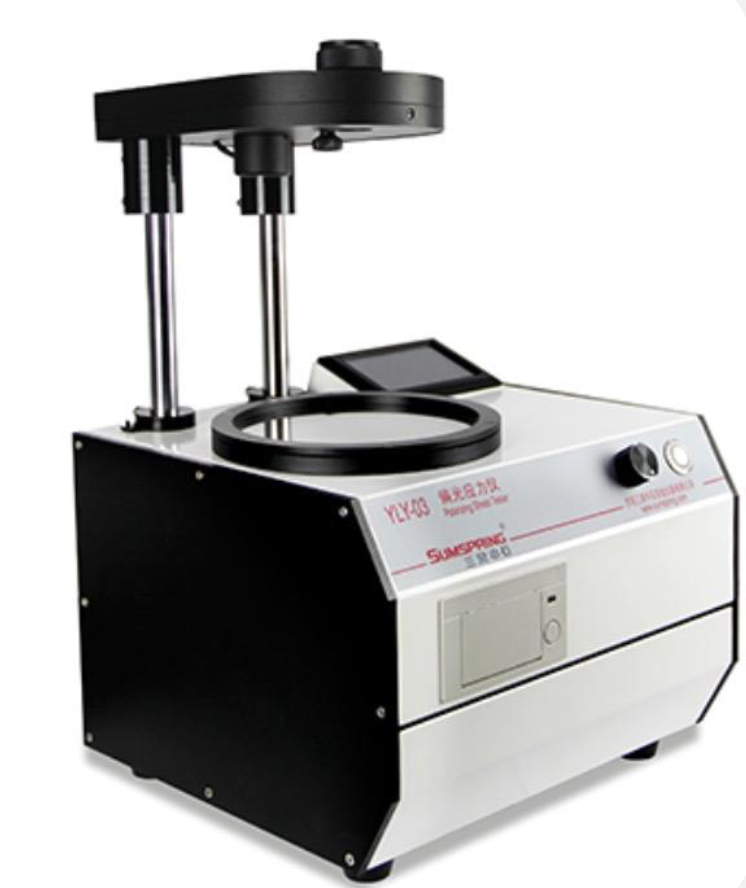
To catch it, we test finished bottles with a polarising stress tester. The instrument sends polarised light through the glass, and the stress pattern appears as coloured bands. A well annealed bottle shows even, low-order colours, while a poorly annealed one shows dense, bright bands.
Therefore, annealing time is a cost item, but it is also a quality gate. A buyer can ask a simple question: how long does each bottle spend in the lehr, and what stress value do you accept? A vague answer is a warning sign.
Trick 3: Skipped Optical and Light Inspection
Inspection costs money, so it is an easy place to trim. Some low-price factories slow their optical inspection machines to a crawl, or skip them, and they cut the manual light inspection shift. Nevertheless, the invoice still says the goods were checked.
As a result, defects leave the plant. Furthermore, the miss rate rises quietly, because no one records it. For this reason, the real test is not whether inspection exists, but whether it runs at line speed and whether the records are open to you. Our overview of the glass bottle inspection process in three stages explains how hot end, cold end and pre-shipment checks fit together.
When Glass Bottle Manufacturing Defects Reach Your Filling Line
A defective bottle is cheap only until it reaches a high-speed line. In that moment, a bottle with uneven wall thickness or high residual stress can burst under filling pressure and vacuum.
Meanwhile, the line stops, glass fragments scatter across the conveyor, and the area must be cleared before restart. In addition, the product in the filler bowl may be lost, and the batch record needs a note. Besides, operators are exposed to a safety risk, which is the cost you cannot price.
| Downtime cost item | What it includes |
|---|---|
| Line stop time | Minutes lost on a high-speed line, plus restart ramp |
| Product loss | Liquid in the line, filler bowl and rejected units |
| Cleaning and safety | Manual clearing, inspection, restart checks |
| Schedule impact | Delayed batches and overtime to recover |
| Quality records | Deviations, investigations and customer notices |
Overall, a few cents saved per bottle disappears in a single afternoon of downtime. Consequently, the cheapest bid is often the most expensive contract.
Bottle Finish Tolerance and Ocean Freight Leakage
The finish is where the bottle meets the closure, so tolerance here decides whether your product stays inside. If the thread or bore is out of tolerance, a cork or cap cannot seat evenly, and the seal fails. However, the leak often shows up weeks later, at the customer, not at the plant.
In addition, poor packaging multiplies the risk. Thin cartons, missing dividers and a weak pallet pattern cause collisions during ocean freight. Subsequently, breakage and leakage claims arrive together, and the brand pays for both.
Therefore, ask for the finish drawing, the tolerance band, and a closure fit test. Moreover, ask for the packaging spec in writing, including divider type, layer count and pallet pattern. For buyers still comparing factories, our guide on how to choose the right glass bottle manufacturer lists the documents worth requesting before the first order.
Glass Bottle Quote Comparison That Actually Protects You
A fair glass bottle quote comparison looks past the unit price. In practice, it compares the process behind the number.
| What to compare | Weak answer | Strong answer |
|---|---|---|
| Cullet policy | No data | Stated ratio plus incoming inspection |
| Annealing control | Not discussed | Lehr time and accepted stress value |
| Inspection equipment | Visual only | Optical machine plus manual light inspection |
| Finish tolerance | Verbal promise | Drawing with tolerance band and fit test |
| Packaging spec | Standard export | Divider, layer and pallet detail in writing |
| AQL and claims | Not defined | Agreed defect classes and claim window |
| Records | Not offered | Batch records and inspection reports on request |
From Unit Price to Total Cost of Ownership
The final step is a simple shift in thinking. Instead of asking what a bottle costs, ask what a delivered, filled, sealed and shipped bottle costs.
Total cost of ownership equals the purchase price, plus freight and duty, plus inbound inspection, plus the cull and breakage rate, plus line downtime, plus leakage claims, plus storage and returns. Moreover, it includes the cost of a damaged brand, which never appears on an invoice.
| Cost line | Cheap bid | Controlled bid |
|---|---|---|
| Unit price | Lowest | Higher |
| Breakage and cull | High | Low |
| Line downtime | Frequent | Rare |
| Leakage claims | Recurring | Minimal |
| Total outcome | Unpredictable | Stable |
Overall, the controlled bid usually wins on total cost, even when it loses on unit price. For buyers who also need new tooling, our note on glass bottle mold cost shows how to judge that one-time investment separately from the running cost.
FAQ
Is a low quote always a bad sign?
No. However, a low quote with no explanation of cullet, annealing and inspection is a warning. Price should come with a process behind it.
How can I check thermal stress before ordering?
Ask for a stress test report and, if possible, send a sample to a lab for a polariscope check. The test is fast and non-destructive.
What causes leakage after shipping?
Most cases come from finish tolerance outside the band, a closure that does not match the finish, or packaging that allows movement in transit.
Conclusion
The hidden costs of cheap glass bottles rarely appear on the quotation. Instead, they appear on your line, in your freight container and in your customer’s inbox. Therefore, judge a supplier on total cost of ownership, not on unit price. When you compare a custom glass bottle supplier, ask about cullet, annealing time, glass bottle thermal stress control, inspection equipment and packaging spec. These answers separate a real partner from a low bid, and they keep your filling line running.
Need Packaging Advice or a Quote?
Talk to our glass packaging experts — on time and on budget.


