

▸Table of Contents
- 1What Glass Beverage Bottles Wholesale Usually Covers
- 2Beverage Type Decides the Bottle Specification
- 3Pressure and Shape: Why Round Bodies Dominate Carbonated Drinks
- 4Neck Finish and Closure: The Most Common Compatibility Failure
- 5Stock Molds Versus Custom Molds
- 6How Wholesale Pricing Is Built
- 7Quality Checks Before You Approve a Wholesale Lot
- 8Packaging and Freight for Wholesale Orders
- 9How to Compare Wholesale Suppliers
- 10Related Formats Worth Reviewing
- 11FAQ
- 12Conclusion
Buying glass beverage bottles wholesale looks simple on paper: pick a bottle, agree a price, book a container. In practice, however, four decisions decide whether the shipment works on your filling line. Therefore, this guide walks through format, pressure, finish and packaging, and shows how each one moves the landed cost of glass beverage bottles wholesale. Moreover, it lists the checks worth running before you approve a full production lot.
What Glass Beverage Bottles Wholesale Usually Covers
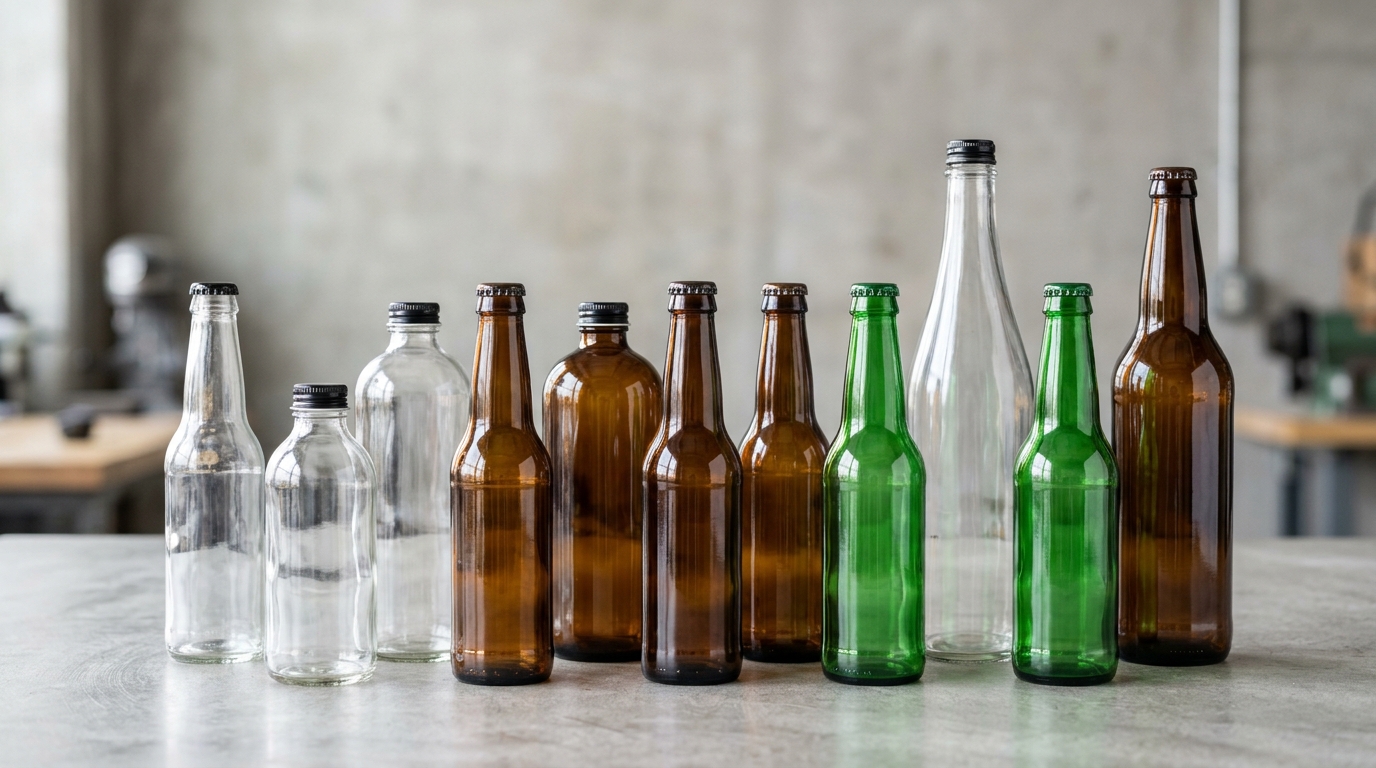
The category is broad, and it includes several products that behave very differently on a line. For instance, still water, sparkling water, soda, juice, cold brew coffee, kombucha and ready-to-drink tea all ship in glass, yet each one places different demands on the container.
Common formats run from 250 ml and 330 ml single-serve bottles up to 500 ml, 750 ml and 1 litre sizes. In addition, wider-mouth jars and swing-top bottles appear in niche beverage segments. Consequently, the first useful question is not what the price is, but what is inside the bottle.
Beverage Type Decides the Bottle Specification
Product chemistry drives the technical spec far more than brand taste does. The table below shows where the main pressure points sit.
| Beverage type | Main technical demand | Bottle feature that matters | Risk if ignored |
|---|---|---|---|
| Still water | Low internal pressure | Lightweight body, simple finish | Breakage in transit, poor capping |
| Carbonated drinks | Internal pressure of roughly 2 to 4 bar | Thicker wall, round body, pressure-resistant finish | Bursting, cap blow-off, leakage |
| Hot fill juice | Thermal shock during filling | Heat-resistant glass, controlled annealing | Cracking at the filler |
| Pasteurised beer | Pressure plus heat cycle | Pressure-rated body, tight finish tolerance | Leakage and flat product |
| Kombucha and RTD tea | Mild pressure plus acidity | Consistent finish, stable colour | Seal failure, sediment complaints |
Therefore, share the beverage type, the fill temperature and the expected shelf life with your supplier before any sample is discussed. Subsequently, the conversation about price becomes meaningful.
Pressure and Shape: Why Round Bodies Dominate Carbonated Drinks
A pressurised container wants to return to a round shape, because a circle spreads load evenly. In contrast, flat panels and sharp corners concentrate stress, so they need more glass thickness to reach the same safety level. For this reason, carbonated beverages are usually packed in round bottles, while square and flask shapes are far more common in still products and spirits.
If you want a distinctive shape for a sparkling drink, expect a heavier bottle and stricter annealing control. Moreover, expect the mold cost to rise, because complex geometry takes more machining and more sampling rounds.
Neck Finish and Closure: The Most Common Compatibility Failure
The finish is the short threaded or crowned section at the top of the bottle, and it is where most wholesale problems start. Each finish follows a defined standard, such as a 26 mm crown for beer, a 28 mm roll-on aluminium finish, or a wider lug finish for swing tops. In addition, bore diameter and thread pitch must match the closure exactly.
A finish that sits outside tolerance will still look correct to the eye. Nevertheless, it will fail under pressure, and the leak often appears at the customer rather than at your plant. For this reason, we always recommend sending your actual closures to the bottle supplier, so the fit can be tested before production.
Stock Molds Versus Custom Molds
Most wholesale buyers face this choice early, and it shapes both cost and timeline.
| Item | Stock mold | Custom mold |
|---|---|---|
| Tooling cost | None or minimal | One-time tooling investment |
| Design freedom | Limited to existing shapes | Full control of shape and embossing |
| Time to first shipment | Faster, no tooling phase | Longer, tooling and sampling come first |
| Volume needed | Lower entry volume | Higher volume to justify tooling |
| Brand differentiation | Shared shape | Unique shelf presence |
For a new brand testing the market, a stock mold is usually the pragmatic start. In contrast, a brand with a fixed packaging identity should budget for a custom mold early, because changing shape later means paying for tooling twice. Our note on glass bottle mold cost explains how that investment is structured.
How Wholesale Pricing Is Built
The price per bottle is only one line in the total. In fact, wholesale cost is assembled from several drivers, and each one can move independently.
| Cost driver | What changes it | Effect on price |
|---|---|---|
| Glass weight | Bottle design and target strength | Heavier bottles cost more in material and freight |
| Colour | Flint, amber or custom colour | Coloured glass needs dedicated batch control |
| Decoration | Label, frosting, coating, embossing | Each added step adds handling and yield loss |
| Order volume | Container utilisation | Larger runs spread setup cost |
| Packaging | Dividers, cartons, pallet pattern | Better protection costs more but reduces claims |
| Freight | Weight and distance | Glass is heavy, so weight limits arrive before volume |
Consequently, a quote that looks lower per bottle can still land higher once packaging and breakage are counted. To keep freight efficient, many buyers review lightweighting options, which we cover in our analysis of lightweight glass bottles.
Quality Checks Before You Approve a Wholesale Lot
Before a container leaves, the lot should be measured, not simply looked at. Therefore, ask for records covering wall thickness, verticality, finish dimensions, capacity and fill point, residual stress, and thermal shock.
In addition, confirm the sampling rule in writing. Most buyers use an AQL plan, and the acceptance numbers should be agreed before production starts, not after a dispute. For a detailed walkthrough of how hot end, cold end and pre-shipment checks fit together, see our guide to the glass bottle inspection process.
Packaging and Freight for Wholesale Orders
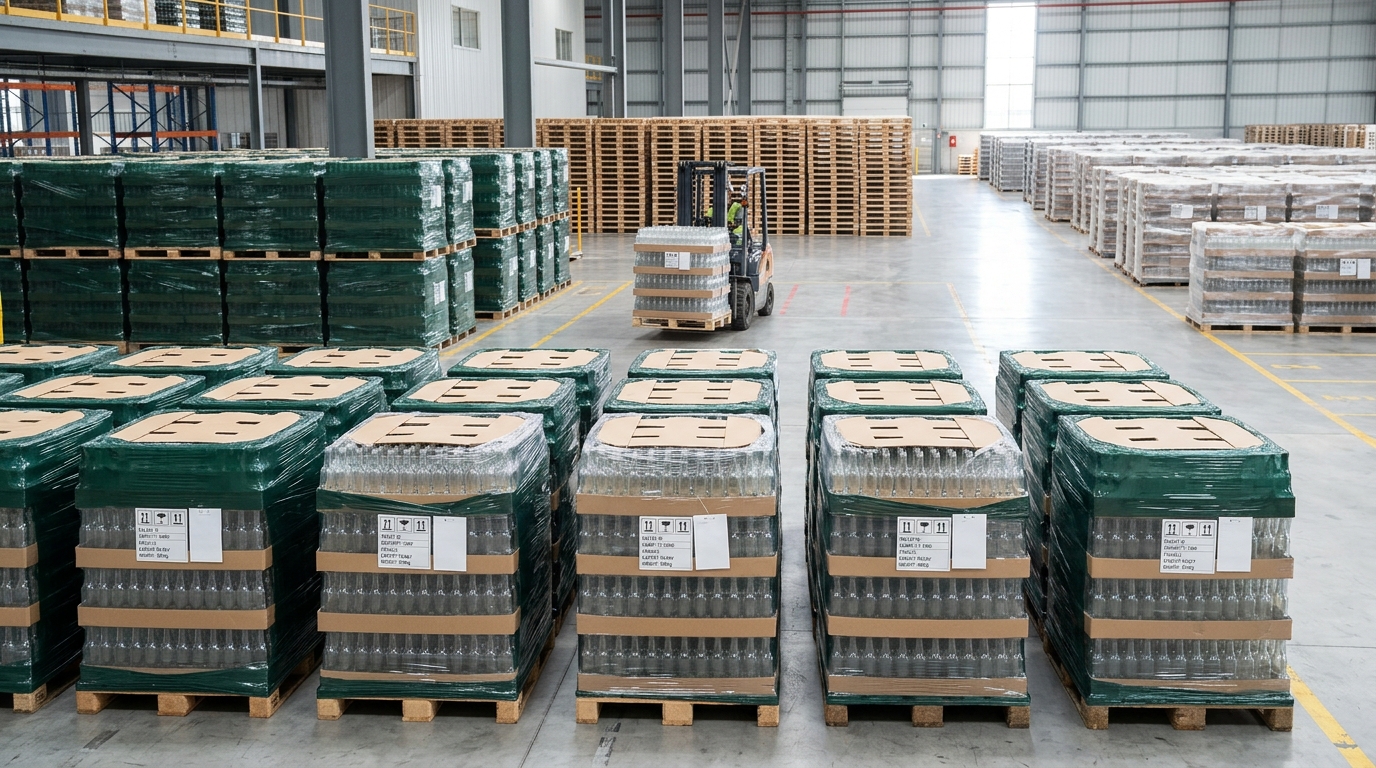
Glass is dense, so weight usually limits a container before space does. For this reason, carton design and pallet pattern directly affect how many bottles you can ship and how many arrive intact.
Dividers, layer pads, shrink wrap and a stable pallet pattern reduce movement inside the carton. Conversely, thin cartons and missing dividers save a little packaging money and create breakage claims. Moreover, broken glass in a container can damage the bottles around it, so one weak carton often costs far more than its own value.
How to Compare Wholesale Suppliers
A structured comparison keeps the decision objective. The checklist below covers the points that separate a reliable supplier from a low bid.
| What to compare | Question to ask |
|---|---|
| Beverage experience | Which drinks have you supplied this bottle for |
| Mold status | Stock mold or custom, and who owns the tooling |
| Finish control | Drawing, tolerance band, and closure fit test |
| Inspection | Equipment used and records available |
| Packaging spec | Divider type, layer count and pallet pattern |
| Release rule | Agreed AQL plan and claim window |
| Change control | How design or material changes are approved |
If you are still shortlisting factories, our guide on how to choose the right glass bottle manufacturer sets out the documents worth requesting before the first order.
Related Formats Worth Reviewing
Different beverage segments carry their own rules. For carbonated products, our guide to wholesale glass soda bottles covers pressure and finish in detail. For premium still water, the review of glass bottled water wholesale explains decoration and closure choices. In addition, buyers moving to larger formats will find the analysis of 1 litre glass bottles useful for line and freight planning.
FAQ
Is there a minimum order for wholesale beverage bottles?
It depends on whether the bottle comes from a stock mold or a new mold. Stock molds allow smaller entry volumes, while custom molds need volume to justify tooling. Always confirm the exact figure in writing.
Can I mix several bottle sizes in one container?
Often yes, and mixing can improve container utilisation. However, each size needs its own packaging and loading plan, so confirm it before booking.
How long does a wholesale order take?
A stock mold order moves faster, because production starts after confirmation. A custom mold adds tooling and sampling rounds before production, so plan for a longer window.
Conclusion
Sourcing glass beverage bottles wholesale works best when the technical decisions come first. Specifically, define the beverage, the pressure, the finish and the packaging, then compare suppliers on the process behind the price. As a result, the quote you accept matches the line you run, and the container arrives without surprises. If you are planning a beverage launch or a format change, our team can review your specification and propose a bottle and closure combination that fits your filling setup.
Need Packaging Advice or a Quote?
Talk to our glass packaging experts — on time and on budget.


