

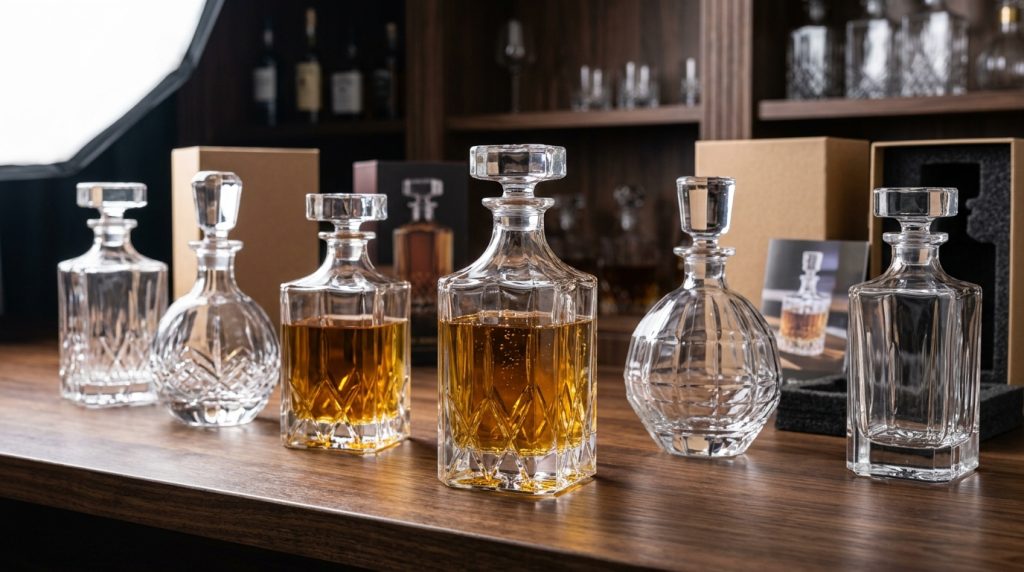
You’ve spent years perfecting the liquid, but when your high end whiskey hits the shelf, it’s the packaging that grabs the consumer’s attention first. If you want to command top-tier pricing, your target demographic expects a premium glass decanter.
The Economics of Premium Packaging in Spirits
The Power of Premiumisation
First and foremost, the luxury spirits market is heavily driven by a concept known as ‘premiumisation’. According to industry data from the IWSR, the premium-and-above category outpaces standard segments. Specifically, consumers drink less volume overall. However, they drink significantly better quality. Therefore, they willingly trade up for prestige.
Customers paying over $100 for a bottle buy an experience and a status symbol. Moreover, the bottle often remains on their home bar long after the whiskey is gone. Thus, cool liquor bottles become permanent display pieces.
If packaging feels cheap, consumers immediately question the spirit’s value. Consequently, they wonder where else corners were cut. Conversely, a heavy-bottomed glass decanter justifies a premium price tag immediately. The perceived value skyrockets when tactile experience matches visual allure.
The Margin Multiplier Effect
Investing in custom glass is not just an expense; it is a margin multiplier. Let’s look at the raw economics for a B2B distillery brand. Developing a custom mold adds $2.00 to $4.00 per unit to COGS. However, this elevated packaging successfully positions the product in a higher tier. As a result, brands can raise retail prices significantly. Furthermore, the ROI on premium glass packaging is unmatched.
Crystal Decanter vs. Super Flint Glass Decanter
Typically, when luxury brands approach us for high-end packaging development, the first technical question is usually about material composition. Should they use traditional crystal or opt for high-grade flint glass?
Historically, a crystal decanter was the absolute gold standard. Lead oxide provided unmatched brilliance, light refraction, and physical weight. However, traditional lead crystal poses significant regulatory and health concerns. Specifically, lead can leach into the liquid over time.
Today, the undisputed standard is Super Flint Glass. This highly refined material offers satisfying weight and absolute clarity. Furthermore, it is entirely lead-free. Most importantly, it is structurally superior for mass production and global logistics.
If you are a brand owner or procurement manager torn between the two materials for your next high end whiskey release, here is a direct comparison to guide your decision:
| Material Feature | Traditional Crystal Glass | Super Flint Glass |
|---|---|---|
| Clarity & Brilliance | Maximum light refraction, high sparkle due to lead content. | Exceptional pristine clarity, nearly indistinguishable from crystal to the naked eye. Excellent light transmission. |
| Weight & Feel | Naturally very heavy, offering a luxurious, dense feel. | Highly customizable; thick bases (glass pooling) can be engineered to achieve a massive, heavyweight feel identical to crystal. |
| Toxicity & Safety | Often contains up to 24% lead oxide; not recommended for long-term spirit storage due to leaching risks. | 100% lead-free, FDA/EU food-grade safe, perfectly inert and ideal for aging and long-term storage. |
| Manufacturing Cost | Extremely high, usually requires artisanal hand-blowing, cutting, and finishing. Difficult to scale. | Highly cost-effective and scalable for B2B wholesale and bulk machine-blown production runs. |
| Durability & Logistics | Relatively brittle, prone to chipping or breaking during automated bottling and global transport. | High structural integrity, thermal shock resistance, withstands high-speed bottling lines and international shipping rigors. |
For an in-depth, technical breakdown of how this specific glass grade elevates your product and compares to lower-tier options, check out our comprehensive guide on Super Flint Glass vs Standard. For 99% of commercial luxury spirits, Super Flint is definitively the superior B2B choice.
Key Design Elements for a Standout Bourbon Decanter
Designing a respected bourbon decanter requires understanding brand identity and consumer psychology. Historically speaking, bourbon has a rugged heritage. However, expensive bourbon commands a sleek and sophisticated presence.
When brainstorming the custom mold for your next limited release or flagship product, you must consider these critical architectural elements:
1. The Glass Base (Punt and Pooling)
Undoubtedly, the base of the bottle is arguably the most important element for communicating value. A thick, solid glass base (referred to in the industry as glass pooling) adds significant physical weight to the bottle. When a consumer picks it up, that bottom-heavy heft subconsciously signals high quality. Furthermore, incorporating a deep punt (the indentation at the bottom) or a sharply faceted internal base can add visual complexity, creating beautiful optical illusions as light passes through the amber liquid.
2. Broad Shoulders and Authoritative Silhouettes
In contrast, unlike the slender, elegant profiles often utilized for white spirits, gin, or wine, a high end whiskey demands physical presence on the shelf. Broad, squared shoulders or faceted geometric designs reflect strength, maturity, and masculinity. The silhouette should look grounded and unshakeable.
3. Surface Textures, Cut Glass, and Embossing
Similarly, to create truly cool liquor bottles that stand out in a saturated market, you need to engage the consumer’s sense of touch. Custom embossing (raised glass lettering, crests, or logos) and debossing (recessed designs) create a highly tactile experience.
Currently, intricate cut-glass patterns—reminiscent of a vintage 1920s crystal decanter—are making a massive comeback in the luxury bourbon space. Advanced mold manufacturing allows us to replicate these classic, complex geometric cuts using automated Super Flint glass production, blending modern manufacturing efficiency with classic, old-world aesthetics.
4. Secondary Decoration Techniques
Ultimately, the glass is the canvas, but the decoration completes the masterpiece. Premium decanters often eschew cheap paper labels in favor of high-end techniques:
* Ceramic Fired Screen Printing (ACL): Fusing ink directly into the glass for a seamless, “no-label” look.
* Metal Medallions: Applying custom stamped metal crests or coins directly to the glass surface for extreme luxury.
* Frosting and Gradients: Partial frosting or color gradients to obscure the liquid slightly, building mystique.
Closures and Seals: Protecting the Liquid Gold
You can engineer and manufacture the most stunning glass decanter in the world, but if you cap it with a lightweight plastic screw thread or a cheap synthetic cork, the luxury illusion shatters instantly. The closure is the user’s primary interactive touchpoint with your product.
Consequently, for high-end spirits, the unboxing and opening ritual is paramount. The visceral sound of a heavy stopper being pulled from the neck of a decanter is iconic and expected.
Material Choices for Premium Stoppers
- Zamack (Zinc Alloy) Stoppers: These heavy metal closures provide exceptional top-weight and a cold, premium, metallic feel. They can be electroplated in gold, silver, copper, or matte black to perfectly match your branding and labeling.
- Glass Stoppers (Vinolok): A glass-on-glass seal offers a sleek, ultra-modern look, absolute chemical inertness, and completely eliminates the risk of cork taint (TCA).
- Natural Wood and High-Grade Cork: For heritage brands emphasizing tradition, a high-grade natural Portuguese cork topped with a bespoke, laser-engraved or CNC-milled wooden cap bridges the gap between modern luxury and rustic tradition.
In addition, your closure must fit seamlessly with the bottle’s neck finish. The tolerance must be exact to prevent evaporation (the dreaded ‘angel’s share’ escaping your finished bottle) while maintaining perfect aesthetic harmony. To explore the best sealing and capping options for your specific project, review our detailed technical breakdown of Premium Liquor Bottle Closures.
Navigating the B2B Supply Chain for Custom Bottles
As a B2B buyer—whether you are the master distiller, a sourcing agent, or a packaging wholesale distributor—your primary concern beyond aesthetics is reliability and risk mitigation. Designing a beautiful custom glass decanter on a screen is only step one; manufacturing it at scale with zero defects and delivering it globally is the real challenge.
According to global supply chain reports from Statista, the glass packaging market is experiencing sustained high demand, which frequently leads to severe supply chain bottlenecks for brands that rely on fragmented networks of brokers and middlemen.
Why You Must Partner Direct with a Manufacturer
The Value of Direct Manufacturing
Therefore, working directly with a specialized, primary glass bottle manufacturer like Jinpeng Glass eliminates the friction, delays, and markups of intermediaries.
- Rapid Mold Development: We translate your 2D sketches or mood boards into exact 3D technical drawings, followed by 3D printed resin models, and finally physical sample molds rapidly. We control the timeline.
- Stringent Quality Control (QA/QC): High-end whiskey bottles cannot tolerate visible seam lines, trapped air bubbles (blisters), or wall thickness variations. Rigorous Acceptable Quality Limit (AQL) inspections on the factory floor are non-negotiable for premium glass.
- Scalability and Security of Supply: Whether you need a limited, one-off run of 10,000 custom bourbon decanters for a special anniversary release, or a steady, contracted supply of 100,000 units annually for your core luxury lineup, direct manufacturing guarantees your capacity is protected.
- Logistics and Palletization: Heavy glass requires specialized packing. We engineer custom corrugated dividers and optimize pallet configurations to ensure your heavy, valuable decanters survive trans-oceanic shipping without micro-fractures or breakage.
FAQ: Sourcing Premium Glass Decanters
How long does it realistically take to create a custom glass decanter mold?
Typically, once the technical 3D design is approved by your team, producing the sample mold and the first physical glass prototypes takes approximately 15 to 25 days. After you approve the physical sample, manufacturing the full set of mass production molds takes an additional 20 to 25 days. You should budget 3 to 4 months from initial concept to your first mass-produced shipment.
Can we use standard closures on completely custom decanter bottles?
Yes, absolutely. While the exterior silhouette and base of the bottle are entirely custom to your brand, our engineers will design the neck finish (the opening) to accept standard industry closures—such as standard bar-top corks, GPI threads, or Ropp closures—to significantly simplify your sourcing and automated bottling line processes.
Is Super Flint glass completely safe for long-term whiskey aging and storage?
Yes. Super Flint glass is 100% lead-free, non-porous, and chemically inert. It will not leach any heavy metals or compounds into your spirit, making it perfectly safe and legally compliant for the long-term storage of expensive bourbon, scotch, or cognac.
What is the minimum order quantity (MOQ) for custom liquor bottles?
For completely custom molds utilizing high-grade Super Flint glass, the industry standard MOQ usually starts at 10,000 to 20,000 pieces per run. This depends on the physical size, glass weight, and complexity of the decanter. For off-the-shelf premium molds, MOQs can be significantly lower.
Does heavy glass impact shipping costs significantly?
Yes, the physical weight of premium glass decanters means fewer bottles per pallet and per shipping container, which increases per-unit freight costs. However, for high end whiskey retailing at high margins, this slight increase in freight is easily absorbed by the premium price the packaging allows you to charge.
Elevate Your Spirits Packaging Today
Stop letting generic, lightweight packaging dilute the perceived value of your premium spirits. The market for high end whiskey is too competitive to compromise on your first impression.
If you are ready to transition from standard stock bottles to bespoke, heavyweight glass decanters that command immediate respect and top-shelf pricing, it is time to work directly with the manufacturing experts.
Contact our packaging engineering and B2B sourcing team today to discuss your next custom bottle project. We will guide you meticulously through material selection, mold design, mass production, and global logistics to ensure your next release looks exactly as exceptional as the liquid tastes.


