

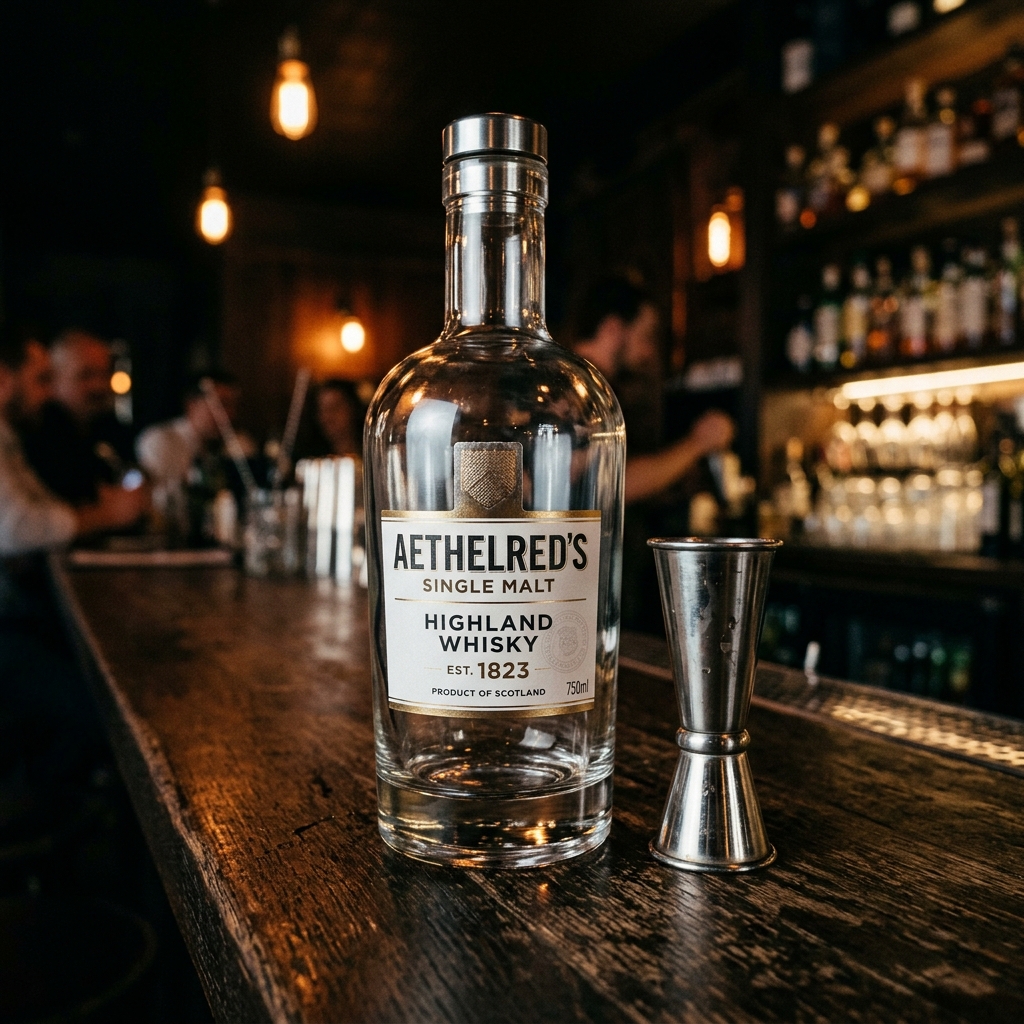
Stop Googling “750ml to oz” and settling for answers meant for home bakers.
If you’re running a commercial bottling line or managing inventory for a spirits brand, rounding up to “about 25.4 ounces” isn’t just sloppy—it costs you real money. A variance of just a few milliliters across a 50,000-bottle run translates to hundreds of liters of premium aged spirit literally poured down the drain (or given away for free).
Let’s cut the fluff. Here is the exact math, the conversion chart you should print and tape to your warehouse wall, and the ugly truth about why your current glass supplier might be screwing up your fill levels.
The Quick Math: How Many ML in an OZ?
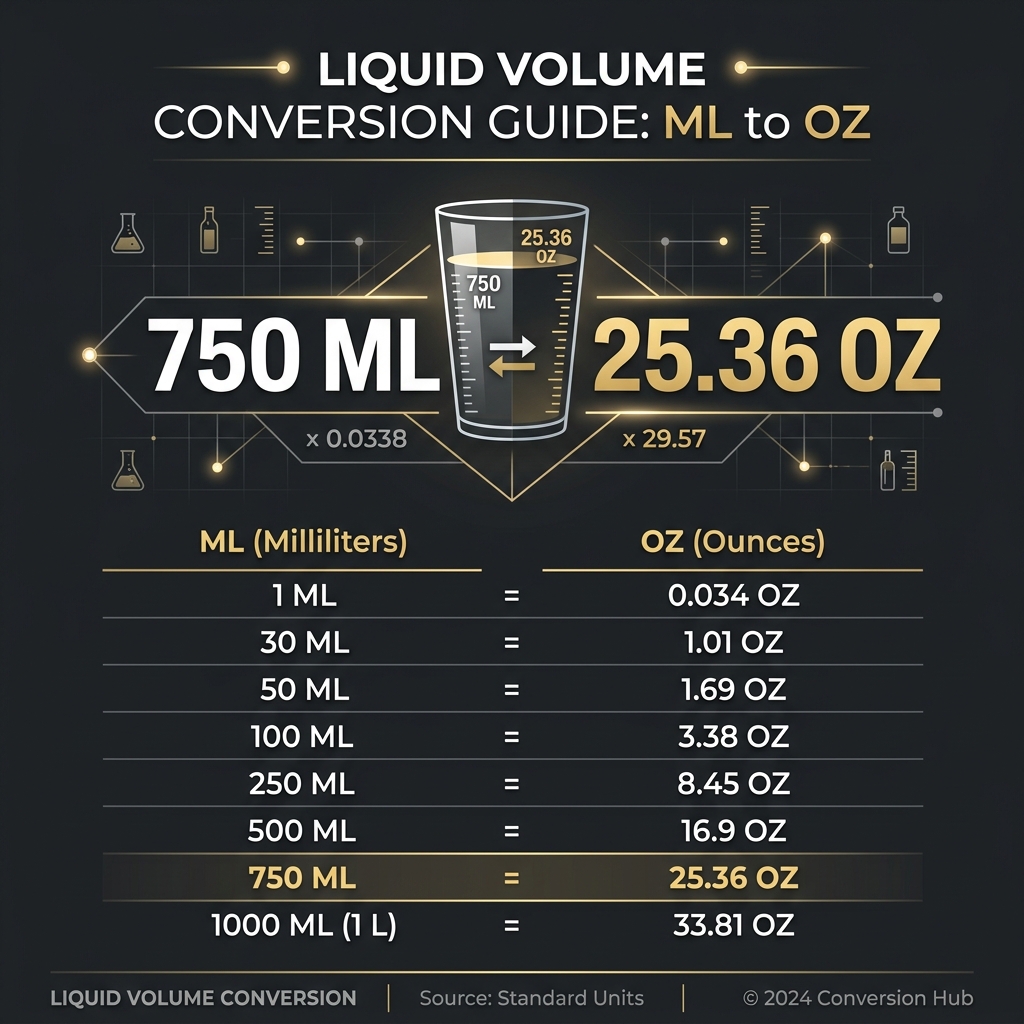
For quick reference on the factory floor, here is the exact US fluid conversion:
- 1 US Fluid Ounce (oz) = 29.5735 Milliliters (ml)
- 1 Milliliter (ml) = 0.033814 US Fluid Ounces (oz)
Sure, bartenders and small-scale operations round this to 30 ml per ounce for mental math. Don’t do that when ordering packaging. When you’re setting up automated filling machines or approving a custom glass mold, you need to use the exact scientific conversion (29.5735) to calculate the precise brimful capacity. Close enough is not good enough.
The Distillery Liquid Conversion Chart
Whether you’re packing mini-spirits for airlines or designing heavy-base luxury decanters, use this chart to cross-reference the most common glass bottle sizes in the spirits industry.
Common Liquor Bottle Sizes (ML to OZ)
| Bottle Size (ML) | Industry Name / Usage | US Fluid Ounces (oz) |
|---|---|---|
| 50 ml | Miniature / “Nip” / Airplane Bottle | 1.69 oz |
| 100 ml | Double Mini | 3.38 oz |
| 200 ml | Quarter Pint | 6.76 oz |
| 375 ml | Half Pint / “Split” | 12.68 oz |
| 500 ml | Half Liter | 16.91 oz |
| 700 ml | Standard European Spirits Size | 23.67 oz |
| 750 ml | Standard US Spirits / “Fifth” | 25.36 oz |
| 1000 ml (1 Liter) | Liter (Common for Duty-Free/Bars) | 33.81 oz |
| 1500 ml (1.5 L) | Magnum | 50.72 oz |
| 1750 ml (1.75 L) | “Handle” / Half Gallon | 59.17 oz |
Factory Tip: Exporting to Europe or the UK? The legal standard is 700ml (23.67 oz). Sticking to the US? It’s 750ml (25.36 oz). We’re currently helping several forward-thinking brands develop custom glass molds that satisfy both markets just by adjusting the fill-level and neck geometry. It saves them a fortune in mold fees.
The “Fifth” Factor: Why 750ml to OZ is the Only Conversion that Matters
Ask anyone running a bottling line, and the number one conversion they deal with daily is 750ml to oz.
Historically called a “Fifth” (because it was roughly one-fifth of a US gallon), the 750ml container is the undisputed gold standard for liquor packaging. Why does getting the math exactly right matter so much to your bottom line?
1. The TTB Doesn’t Mess Around
In the US, the TTB (Tax and Trade Bureau) requires extremely specific volume declarations. Knowing that your 750ml to oz calculation is exactly 25.36 oz helps you design front labels that meet both metric and imperial standards. Fudge this number, and your label gets rejected. I’ve seen product launches delayed by months over a decimal point.
2. Bar Economics (Pour Costs)
Bar owners live and die by “cost per pour.” A standard neat pour in a US bar is usually 1.5 or 2 ounces. That means a true 750ml bottle yields almost exactly 16.9 or 12.6 servings. If your bottle’s capacity is secretly off by a few milliliters, you throw off the economics of every bar you sell to.
3. Freight Weight is Brutal
Volume dictates more than just the liquid. A 750ml glass bottle is engineered to hold exactly 25.36 oz of liquid while maintaining enough structural glass weight to survive shipping. If you don’t understand the exact volume-to-weight ratio, you’ll end up miscalculating total case weights for ocean freight. Overpaying for logistics is the easiest way to kill your margin.
The Ugly Truth About Capacity Variance
Knowing that 750ml equals 25.36 ounces is the easy part. The real nightmare starts when your glass bottles actually show up from the supplier.
Here’s a secret most packaging brokers won’t tell you: They source “stock bottles” from multiple, cheap, unverified kilns to pad their margins. This creates a massive, invisible problem called Capacity Variance.
Imagine your 750ml bottle arrives, but the actual brimful capacity forces your bottling line to overfill by 5ml just to make the bottle look “full” on the retail shelf.
- You lose 5ml of premium batch-distilled gin per bottle.
- Over a production run of 50,000 bottles, that’s 250 liters of lost product.
- At $40 retail a bottle, that cheap glass just cost you tens of thousands of dollars.
Stop Buying from Brokers. Go to the Source.
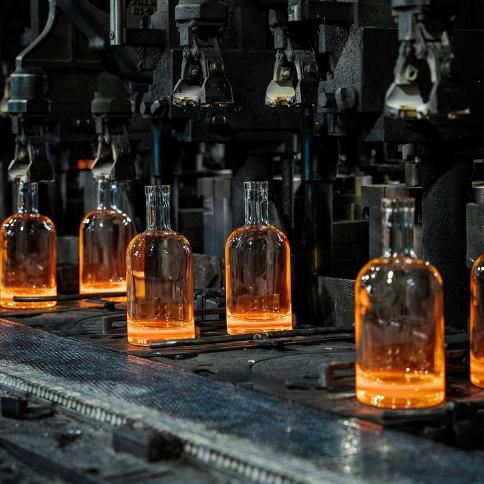
To kill capacity variance and protect your margins, you have to bypass the trading companies and work directly with a true source manufacturer like Jinpeng Glass.
Here is why top-tier distilleries trust direct-factory partnerships:
- IS Machine Precision: We don’t pull random stock off a shelf. We use state-of-the-art IS (Individual Section) machines to create custom molds. The internal volume is engineered to exact specifications, ensuring your 750ml fill line is dead-on, every single time.
- Extra Flint Glass: High-end spirits demand high-end presentation. We use Extra Flint Glass—the highest grade available. No cheap green or blue tint. Just crystal clarity that lets the amber of your bourbon shine.
- MOQ 6,000: Massive corporatized factories demand orders of 50,000+ units. We don’t. We offer premium custom mold development with a Minimum Order Quantity of just 6,000 pieces. It lets boutique brands launch bespoke packaging without draining their cash flow.
Quick FAQs
How many ml in a shot? In the US, a standard shot is 1.5 ounces, which is 44.36 ml. (Though many commercial shot glasses hold 2 ounces / 59.14 ml).
How many ml is a handle of liquor? A “handle” is 1.75 liters. That’s 1750 ml, or 59.17 ounces. You’ll get roughly 39 standard 1.5-ounce shots out of it.
Is 750 ml a fifth? Yes. Before 1980, the standard US liquor bottle was exactly one-fifth of a gallon (25.6 oz). When the industry went metric, it shifted slightly to 750 ml (25.36 oz), but everyone still calls it a fifth.
Ready to Ditch the Stock Bottles?
When you search for a “glass bottle manufacturer,” most of the results are trading companies waiting to inflate your price and mess up your capacities. Work directly with a China-based source factory like Jinpeng Glass. You get direct access to the engineers designing your mold and the kiln firing your glass.
Stop stressing over conversions and start building your custom bottle.
👉 Contact Jinpeng Glass Today for a Custom Mold Quote Let’s build a bottle worthy of the liquid inside.


