

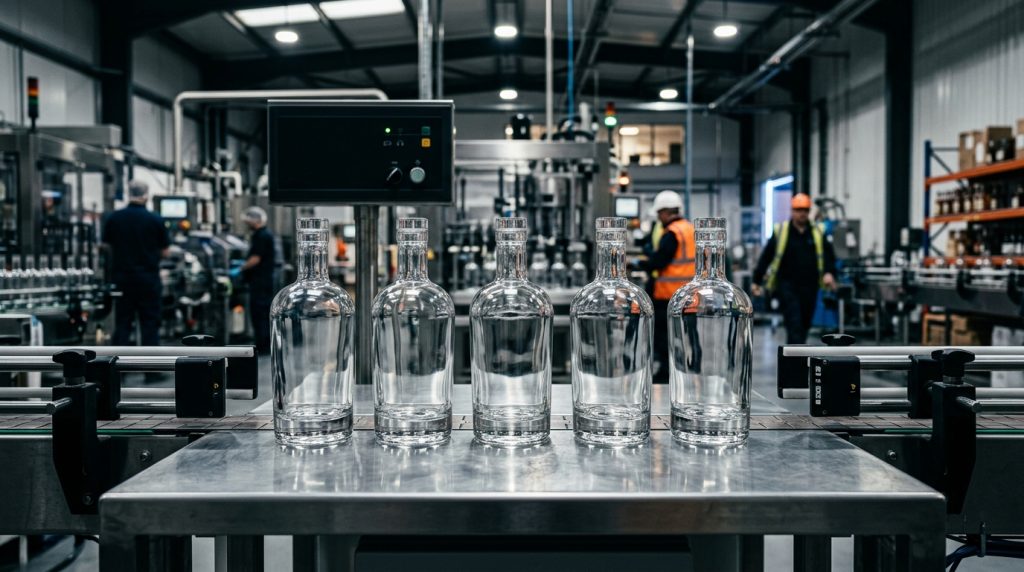
Transitioning from catalog stock bottles to proprietary custom glass packaging involves specific fixed tooling investments and variable material costs. Therefore, accurately projecting your custom glass bottle manufacturing cost is critical for any brand. This technical reference guide provides verified 2026 global averages for custom glass mold fabrication, per-unit material pricing, and secondary surface decorations. As a result, beverage procurement teams can perform accurate supply chain planning.
1. Custom Glass Bottle Manufacturing Cost: Mold Fabrication
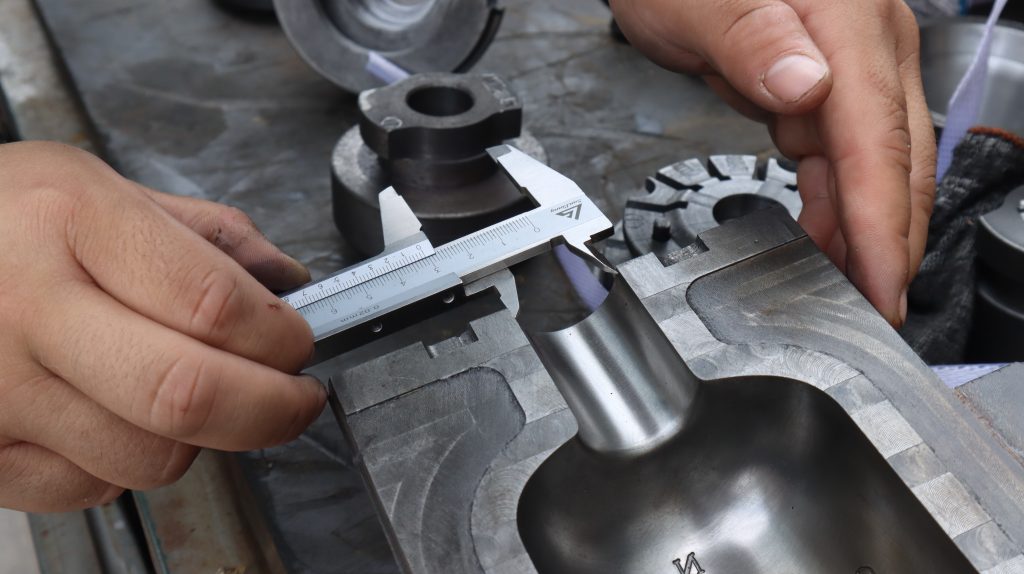
First and foremost, unlike plastic injection processes, glass forming explicitly requires cast-iron or bronze alloy molds. Specifically, these molds must withstand molten glass temperatures exceeding 1,500°C (refer to the principles of glassmaking).
Consequently, developing a custom bottle typically involves two distinct tooling phases: prototyping and mass production.
| Tooling Phase | Average Cost Range (USD) | Standard Lead Time | Technical Purpose |
|---|---|---|---|
| Sample Mold (Single Cavity) | $500 – $800 | 15 – 20 Days | Engineers use this mold strictly to produce 10-20 physical prototypes for dimension, capacity, and closure tolerance testing. |
| Mass Production Mold Set | $1,500 – $3,500 | 25 – 30 Days | Factories require a complete IS (Individual Section) machine mold set for high-speed automated production lines. |
Data Note: Furthermore, the variance in mass production mold costs depends heavily on the complexity of the bottle design. For example, features such as deep punts or sharp, angular shoulders require significantly more CNC machining time. However, many manufacturers offer full mold fee refunds once buyers exceed a cumulative order volume of 100,000 units.
2. Per-Unit Material Pricing (Glass Weight vs. Purity)
Interestingly, the unit price of a glass bottle does not depend on its volumetric capacity (e.g., 750ml). Instead, it relies on the total physical weight of the glass and the purity of the raw materials.
| Material Grade | Key Application | Estimated Unit Price (750ml, 600g-800g) | Material Characteristics |
|---|---|---|---|
| Standard Flint Glass | Wines, Syrups, Basic Beverages | $0.25 – $0.45 | Offers standard clarity; factories use it for automated, high-volume production. |
| Extra Flint (Super Flint) Glass | Premium Spirits (Tequila, Vodka, Cognac) | $0.35 – $0.80 | Provides extreme clarity because manufacturers remove iron impurities. Essential for premium custom spirits bottles. |
Additionally, for fractional sizes, such as standard 50ml miniature bottles, the reduced material weight brings the average unit cost down to 0.15−0.15−0.30.
3. Minimum Order Quantities (MOQ) Requirements
In fact, industrial glass furnaces operate continuously (24/7/365) to maintain stable thermal dynamics. As a result, extremely small production runs disrupt line pressure, making them physically and economically unviable.
Because of this limitation, the standard B2B minimum order quantity (MOQ) for custom mold production generally starts at 6,000 units per run.
For instance, procurement officers encountering suppliers claiming the ability to manufacture 500 or 1,000 custom bottles should exercise caution. In reality, brokers usually outsource these micro-runs to semi-automatic, hand-blown facilities. Unfortunately, these smaller shops often struggle to maintain the strict dimensional tolerances that high-speed automated bottling and capping lines require.
4. Secondary Surface Decoration Costs
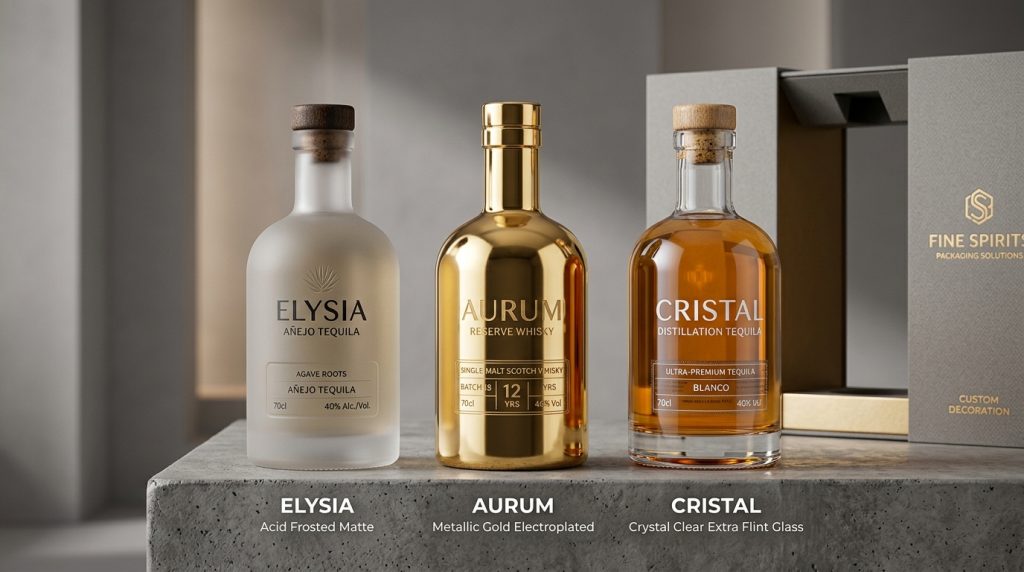
Undoubtedly, surface treatments add significant brand value, but they also introduce secondary per-unit processing costs. Accordingly, the table below outlines the industry averages for common decoration techniques.
| Decoration Technique | Estimated Cost Per Unit (USD) | Application Method |
|---|---|---|
| Acid Etching (Frosting) | $0.05 – $0.10 | Technicians use chemical submersion to yield a consistent matte finish. |
| Silk Screen Printing | $0.08 – $0.15 (per color) | Printers apply high-temperature baked enamel ink, which ensures high durability. |
| Metallic Electroplating | $0.20 – $0.40+ | Facilities use vacuum metallization to create premium, fully opaque metallic finishes. |
Ultimately, accurate supply chain forecasting requires calculating both the base glass weight cost and any specialized bottle surface decorations that you add post-production. Therefore, to determine your exact custom glass bottle manufacturing cost, we recommend consulting directly with an established glass manufacturer to obtain precise modeling based on a specific 3D drawing or physical sample.


