

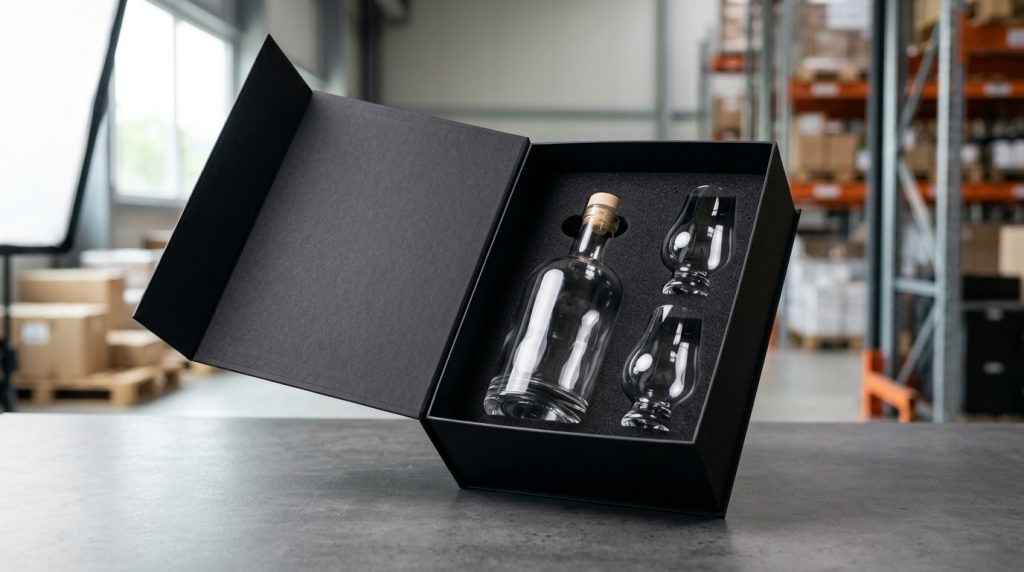
When consumers shop for a whiskey gift set, they aren’t just buying alcohol; they are buying presentation and perceived value. Designing amazing alcohol bottles and secondary packaging is the ultimate strategy for premiumizing a standard SKU.
The Economics of Premiumization in Gifting
The Power of Perceived Value
Before we get into the technicalities of punt depths, glass clarity, and closure types, let’s look at exactly why you need to invest heavily in the physical presentation of your product. The data simply doesn’t lie. According to IWSR’s global beverage alcohol market analysis, the premiumization trend continues to defy economic gravity across global markets. Consumers drink less in sheer volume. However, they definitively drink better. When seeking alcohol gift sets, they willingly stretch wallets for perceived value. They demand premium aesthetics.
Dominating the Retail Shelf
If you are bottling an expensive scotch, the glass must telegraph that high price point before the cork is even popped or the seal is broken. You cannot put a $100 liquid in a $0.50 mass-produced bottle. Consumers will not feel good about the purchase. In the B2B space, distributors and retailers are desperate for high-margin whiskey gifts. These items practically sell themselves. They want heavy glass, flawless clarity, and bespoke detailing. Furthermore, they demand unboxing experiences that drive social media sharing.
A well-designed gift set dramatically increases your retail footprint. It commands premium eye-level shelf space. Additionally, it drives impulse purchases during key gifting seasons. But remember this fundamental truth of packaging: the cardboard box gets thrown away. The bottle stays on the bar cart. The bottle is the permanent, physical billboard for your brand in the consumer’s home.
Architecting the Anchor: Designing the Primary Glass
The absolute centerpiece of any successful gift presentation is the primary bottle. When we talk about engineering and designing amazing alcohol bottles, we are talking about meticulously manipulating light, weight, silhouette, and texture to create undeniable shelf presence.
Material Grade and Physical Weight
First, consider the glass weight and material grade. High-end spirits demand Super Flint (Extra Clear) glass. The extreme purity of the silica ensures the true amber hue shines through. It eliminates any green or blue refraction. A thick glass base adds significant physical weight. This is often referred to as a glass heel or punt. In the psychology of consumer packaging, physical weight directly equates to perceived quality. When a buyer lifts a bottle of good scotch whiskey, they subconsciously expect substantial heft. If it feels light and hollow, the illusion of luxury shatters instantly.
Custom Silhouettes and Brand Identity
Next, look at the silhouette. Commissioning a bespoke mold separates you from lazy brands. You avoid using generic off-the-shelf stock options. Yes, a custom mold requires upfront capital for tooling. However, amortizing it over a 50,000-unit run adds mere pennies per bottle. A unique shape creates a highly recognizable brand asset. Consequently, consumers can easily identify it from across a crowded room.
Permanent Tactile Decoration
Finally, consider permanent decoration. Embossing your logo into the glass adds a tactile, permanent element. A paper label can never replicate this. When a buyer picks up the bottle, their thumb should naturally rest on your embossed brand mark.
Standard vs. Luxury Whiskey Gift Sets: A Strategic Breakdown
To clearly illustrate the chasm between an entry-level set and a high-end execution, let’s break down the typical specifications. As an experienced packaging consultant, I always force brand owners to explicitly define their target retail tier before we draft a single CAD sketch or pull a single glass sample.
| Component | Standard Gift Set ($30 – $50 Retail) | Luxury Gift Set ($100+ Retail) |
|---|---|---|
| Glass Quality & Weight | High Flint (Standard Clear). Moderate weight profile (approx. 500g – 650g empty weight). | Super Flint (Extra Clear). Heavyweight glass base, massive punt (850g – 1500g+ empty weight). |
| Bottle Design & Tooling | Stock public mold. Standard cylindrical or square shape with a large, flat paper label application. | Custom proprietary mold. Deep glass embossing, intricate metallic decals, or targeted frosting/sandblasting. |
| Closure System | Aluminum Ropp cap or basic synthetic T-cork finished with a standard PVC heat-shrink capsule. | Heavyweight Zamac (zinc alloy) stopper, high-grade natural micro-agglomerated cork, custom stamped tin capsule, or hand-dipped wax seal. |
| Secondary Packaging | Folding carton (flute corrugated), basic 4-color CMYK print, standard die-cut display window. | Thick rigid setup box, custom EVA foam or velvet-lined inserts, extensive foil stamping, spot UV, hidden magnetic closure flap. |
| Value-Add Extras | Two branded, lightweight, machine-pressed glass tumblers. | Crystal Glencairn tasting glasses, branded stainless steel chilling stones, copper hip flasks, or curated tasting miniatures. |
The Multi-Bottle Strategy: Incorporating Tasting Sets
The Rise of Component Malts
A massive, profitable trend is emerging globally. Brands include smaller, complementary bottles nested alongside the main 750ml anchor bottle. For example, you might launch a blended scotch whisky. You can dynamically showcase the individual component malts that make up the blend. This is exactly where multi-bottle tasting sets become incredibly powerful marketing tools.
Creating an Interactive Experience
You can include 50ml replica bottles tightly secured in EVA foam. This transforms a simple purchase into an interactive tasting experience. Consumers absolutely love the engaging aspect of deconstructing a blend at home with friends. You must source smaller formats without sacrificing the premium feel. Review our mini alcohol bottles guide to understand the tooling requirements.
Maintaining Material Consistency
Do not make the amateur mistake of using a cheap plastic miniature. It ruins the aesthetic next to a stunning glass decanter. The tactile dissonance between the heavy glass and the cheap plastic will ruin the premium perception immediately. Miniature bottles must be exact replicas of the main glass. They must utilize the exact same Super Flint material and premium closures.
Designing Bottles for Blends: Navigating Complex Profiles
The Myth of Single Malt Superiority
There’s a persistent, albeit completely outdated, myth in the spirits industry that single malts automatically demand better, more expensive packaging than blends. This is entirely false. Some of the most highly sought-after, critically acclaimed, and wildly profitable spirits on the global market are masterful blends. When you are developing packaging for a premium scotch and whiskey blend, your bottle design must visually communicate harmony, deep complexity, and luxurious approachability.
Visualizing Harmony Through Glass
Because a high-end blend is often positioned as smoother, more rounded, and more versatile than a heavily peated, aggressive single malt, the glass design can powerfully reflect this liquid reality. Sweeping elegant curves, softly rounded shoulders, and clear, unobstructed labeling panels work exceptionally well here. You want the consumer to see the rich amber liquid glowing through the glass, emphasizing the expert, harmonious blending process.
Optimizing Label Real Estate
Furthermore, the label real estate on the bottle needs to generously accommodate the extensive storytelling required for a blend. You might need significant space to mention the varied cask finishes—Oloroso sherry, first-fill bourbon, or tawny port—that contribute to the final flavor profile. A wider, flatter bottle face (such as a classic flask silhouette or a modern flattened oval shape) provides an excellent, broad canvas for detailed screen printing, metallic foiling, or large, heavily textured paper labels that explain the deep provenance and craftsmanship of the liquid inside.
Manufacturing Realities: What Brands Constantly Get Wrong
Let me be entirely blunt, speaking as someone who lives and breathes packaging production: I have seen far too many brilliant, award-winning design concepts die a brutal death on the factory floor simply because the creative agency didn’t understand the fundamental physics of glass manufacturing. You can render the most beautiful, avant-garde bottle in the world on a 3D CAD screen, but if the angles are too sharp, the glass will thin out critically and shatter on the high-speed bottling line. If the neck is too narrow, the liquid fill speed will drop to a crawl, massively driving up your third-party co-packing costs.
When you design for an expensive scotch that needs to scale globally, you absolutely must balance breathtaking aesthetics with ruthless manufacturability.
Essential Engineering Tolerances
- The Draft Angle: Hot glass needs to release cleanly from the steel mold. If your bottle design is a perfect geometric cube with zero draft angle, it literally cannot be manufactured efficiently. The glass will stick and tear. We always engineer a slight, often imperceptible taper to ensure smooth production runs, rapid cooling, and high yield rates, keeping your per-unit costs down.
- Shoulder Thickness and Glass Distribution: Sharp, aggressively horizontal shoulders look fantastic on a mood board, but they are notorious for uneven glass distribution. The molten glass naturally wants to pool and flow. By working directly with a manufacturer like Jinpeng Glass, our in-house engineers optimize the CAD drawings to ensure the glass distribution is perfectly even, preventing weak spots that lead to catastrophic breakage during rough international ocean freight shipping.
- Closure Compatibility and Tolerances: Never, under any circumstances, design a bottle without simultaneously designing and testing the closure. The bore (the exact inside diameter of the glass neck) must be perfectly calibrated to your chosen cork, synthetic stopper, or glass closure. A fraction of a millimeter off in tolerance, and you either have a stopper that pops out during transit due to temperature changes, or one that requires heavy pliers for the consumer to remove. Both are brand-destroying experiences.
- Minimum Order Quantities (MOQs) and Logistics: When you move from standard stock bottles to custom proprietary molds, your production MOQs will shift. We help B2B buyers navigate the delicate balance between ordering enough volume to amortize the upfront mold cost, while rigorously optimizing pallet configurations to maximize shipping container space. Dead space in an ocean freight shipping container actively destroys your profit margins. A well-designed custom bottle doesn’t just look spectacular on a retail shelf; it also packs efficiently in a master carton.
Conclusion: Moving from Fragile Concept to Scalable Production
The Importance of Cohesion
Creating a high-converting, high-margin whiskey gift set is a complex, high-stakes orchestration of industrial design, mechanical engineering, and global logistics. It’s not enough to simply order a few off-the-shelf stock components from five different suppliers and hope they miraculously look good together in a cardboard box. From the heavy base of the primary custom decanter to the precision-engineered replicas of the miniatures, every single physical element must ruthlessly and consistently communicate uncompromising quality.
Don’t Compromise on Your Glass
If you are a master distiller, an ambitious brand owner, or a high-volume B2B wholesale distributor looking to capture the incredibly lucrative holiday gifting market, stop relying on generic, forgettable packaging. The glass is your silent, most effective salesperson. It works 24 hours a day, 7 days a week on the crowded retail shelf and the dimly lit back bar.
Partner with Manufacturing Experts
At Jinpeng Glass, we don’t just supply empty glass bottles; we architect comprehensive packaging solutions. We bridge the critical gap between ambitious, wildly creative design and scalable, cost-effective industrial manufacturing. If you are ready to massively upgrade your brand’s physical presence, protect your margins, and start developing a custom mold that will completely dominate the upcoming holiday sales season, reach out to our engineering and design team today. Let’s stop designing compromises and start building a bottle that is truly worthy of the liquid inside.


