

In my recent meetings with several high-end whiskey, tequila, and rum brands looking to expand their footprint in Europe, one topic consistently dominates the conversation: the EU Packaging and Packaging Waste Regulation (PPWR).
The initial reaction from most brand owners is often the same: “The new rules don’t take effect until January 2030. It’s only mid-2026. We have plenty of time.”
I usually have to be the one to burst that bubble. If you wait until 2028 or 2029 to start planning your packaging redesign and replacement, your products will likely be forced out of the EU market entirely due to lack of compliance certification.
Having spent 15 years navigating the complexities of glass manufacturing and global exports, and now overseeing business operations at Jinpeng Glass, I know exactly how long a full packaging transition takes. Moving from material evaluation to running successful commercial line trials takes anywhere from 18 to 36 months. That timeline isn’t just an engineering bottleneck; it is the ultimate survival line for brands exporting to the EU.
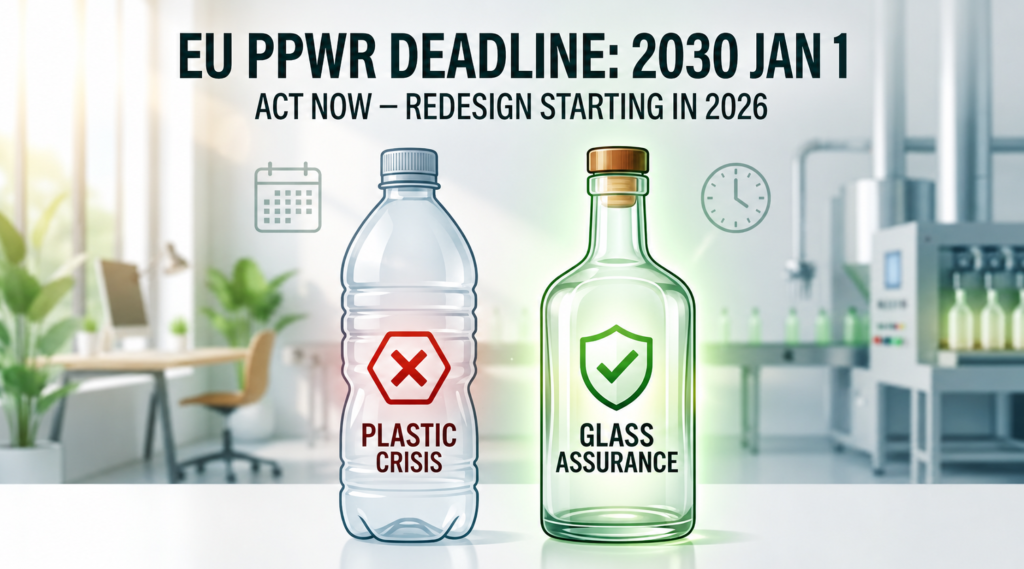
The 2030 PPWR Hurdles: Can Your Current Packaging Survive?
Historically, premium spirits and beverage brands have poured their energy into liquid aging, recipe perfection, and marketing, often leaving packaging compliance on the back burner. But the EU is no longer issuing warnings—they are issuing bans.
Let’s look at the three core mandates taking effect on January 1, 2030, and how they impact existing plastic versus glass packaging:
| PPWR Core Requirement | The Struggle for Plastic Packaging | The Natural Advantage of Glass |
| Article 6: Mandatory Recyclability | Multi-layer plastics will struggle to reach A or B grades, facing market phase-outs. | As a “Permanent Material,” glass easily meets the highest Grade A standards. |
| Article 7: Minimum PCR Content | Contact-sensitive plastics need 10-30% PCR, facing severe supply chain shortages. | Highly inert and safe, glass is naturally exempt from PCR quotas targeting plastics. |
| Annex V: Format Bans | Retail multi-pack shrink films and single-use formats will be strictly banned. | Not targeted by the Annex V ban list, ensuring total market access security. |
Data Source: European Commission Official PPWR Draft & Explanations
The reality is stark. Brands relying heavily on plastic packaging are walking through a regulatory minefield. To meet post-consumer recycled (PCR) quotas, they must drastically alter their material structures while competing for a globally constrained supply of food-grade PCR materials.
Why Does a Packaging Transition Take 18+ Months?
Many exporters accustomed to fast-paced procurement assume that changing packaging simply means calling a new supplier. In reality, switching packaging materials is a highly complex, cross-departmental engineering project.
- Material & Mold Development (1-3 months): Once the base material is chosen, we must evaluate the trade-offs regarding seal integrity and shelf life. Premium spirits demand absolute sealing perfection, which requires precise mold engineering.
- Supplier Qualification & Compatibility (6-12 months): This involves requesting samples, auditing chain-of-custody documentation, and ensuring the new glass bottles’ tolerances perfectly match the client’s existing filling lines.
- Line Trials (3-9 months): This is the most frequently underestimated phase. Introducing new packaging requires recalibrating machine parameters. Most brands need at least two to four rounds of line trials at the filling plant before full commercialization.
- Stability Testing & Regulatory Filing (3-12 months): This covers accelerated shelf-life testing and the drafting of the EU Declaration of Conformity.
Add these phases up. If your brand initiates a specification change in the second half of this year, you will realistically only complete the entire process by late 2028.
The Ultimate Solution: “Permanent Materials” and Lightweighting
At this critical juncture, rather than getting bogged down in the engineering nightmares of reconfiguring plastic composites, a pivot in strategy is the smartest move. This is exactly why an increasing number of premium spirits brands are transitioning their core product lines entirely to glass.
Beyond the obvious fact that extra-flint glass perfectly showcases the color and premium nature of high-end liquors, the compliance benefits are undeniable. Glass is 100% infinitely recyclable without loss of quality. It boasts zero chemical migration, perfectly protecting contact-sensitive liquids.
Of course, the EU market is also aggressively pushing for carbon footprint reduction and “packaging minimization” (PPWR Article 10). At Jinpeng Glass, we are already ahead of the curve. Utilizing advanced NNPB (Narrow Neck Press and Blow) lightweighting technology, we significantly reduce the weight of our glass bottles without compromising their structural strength. This not only slashes transatlantic shipping costs but guarantees our clients will breeze through the EU’s packaging minimization audits.
What Should You Do in the Next 90 Days?
You don’t need to finalize a new bottle design tomorrow, but a risk assessment must be at the top of this quarter’s agenda.
I recommend your team execute two tasks immediately: First, pull a comprehensive list of your EU-bound packaging specifications (down to the material components). Second, cross-reference this list against Annex V to identify any high-risk formats that are slated for an outright ban.
If your portfolio includes premium spirits packaging that urgently needs replacing, or if you want to evaluate how smoothly your current filling lines can transition to lightweight glass bottles, I am Vera, and I invite you to visit the Jinpeng Glass website to contact our technical team for a free feasibility assessment.
Don’t let a packaging oversight be the reason you lose the European market.


