

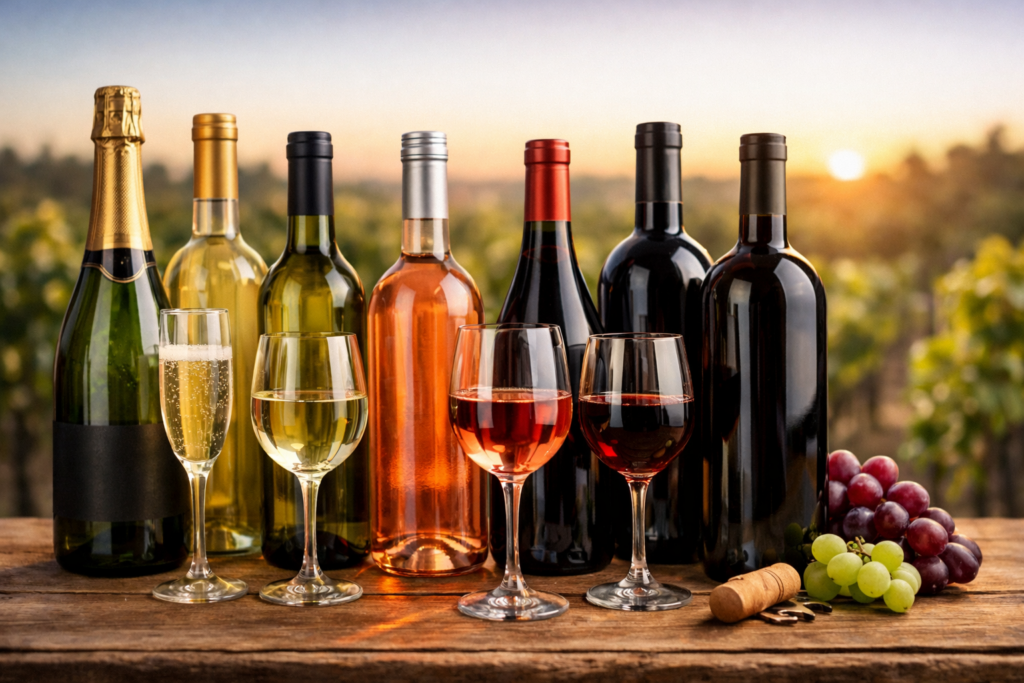
Have you noticed rows of wine bottles —some crystal-clear, others deep green? From Flint to Antique Green, Wine Bottle Glass preserves wine and captivates on the shelf.
At Jinpeng Glass Bottle, we use advanced manufacturing and precision craftsmanship to create each bottle with clarity, consistent quality, and a unique brand identity.
1. The Science Behind Bottle Colors
Light, UV, and Wine Stability
Wine is particularly sensitive to light, and ultraviolet (UV) rays can trigger chemical reactions that accelerate aging or create off-flavors.
Different bottle colors offer varying levels of UV protection:
• Flint (transparent glass): Minimal UV protection; ideal for fresh white wines and Rosé.
• Antique green glass: Moderate UV protection; suitable for red wines with medium-term storage.
• Dead Leaf Green: Strong UV protection; often used for wines intended for long-term aging.
Reference: Packaging Performance: Comparing Wine Bottle Colors for Quality Preservation
At Jinpeng Glass, we’re more than a supplier—we’re your packaging partner. Beyond high-quality glass bottles, we provide professional guidance to help you select the ideal design and finish for your wine, tailored to its style, audience, and storage requirements.
2. Flint Glass:Transparent Beauty
What is Flint Glass?
Flint glass is colorless and crystal-clear, allowing the wine’s true color to shine while conveying a modern aesthetic.
• Perfect for white wine, Rosé, and sparkling wines
• Highlights the wine’s natural color, enhancing brand appeal
• Limited UV protection, suitable for fast-moving products
Reference: Outshinery Wine Packaging Guide
The difference between high-clarity and standard-clarity glass:
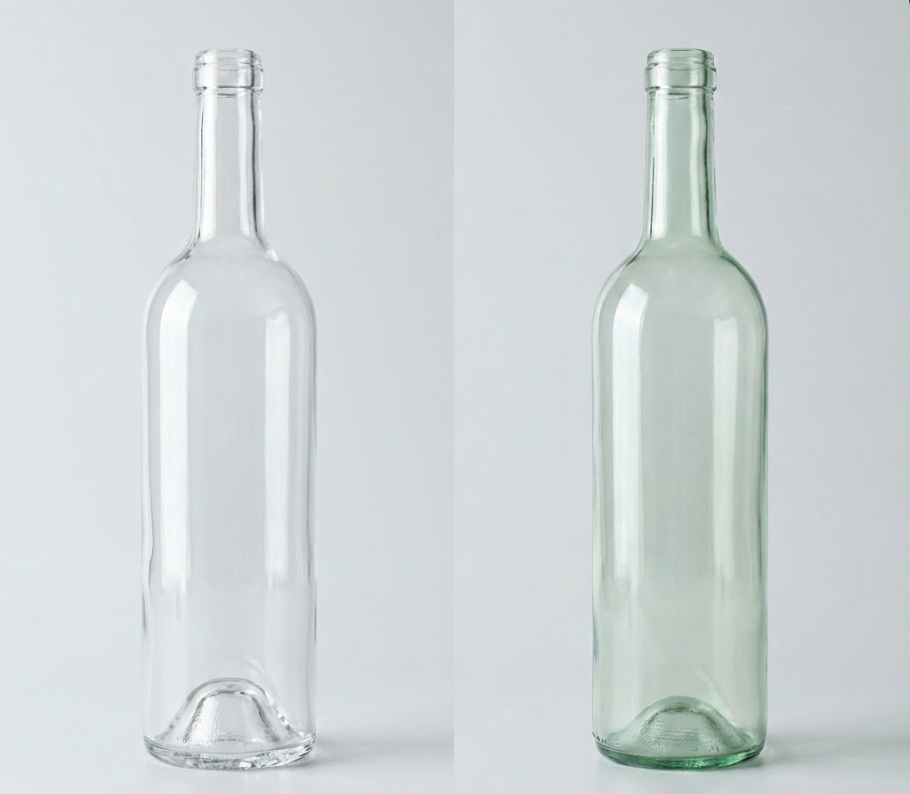
At Jinpeng Glass, we know subtle differences define bottle quality. High-clarity bottles demand ultra-pure raw materials, with iron below 0.02% to avoid any green tint, ensuring perfect transparency for wine. Standard-clarity bottles tolerate slightly more iron, producing a faint green hue, suitable for baijiu or economical wines.
To achieve the “water-white” effect of high-clarity glass, Jinpeng Glass employs an advanced chemical iron-removal process. This includes using high-purity silica sand as the primary raw material and adding specialized decolorizing agents—such as selenium and cobalt—during the glass melting process. Selenium oxidizes green-tinted ferrous iron (Fe²⁺) in the glass to colorless ferric iron (Fe³⁺), while cobalt counteracts residual yellow hues with its inherent blue tint, thereby achieving a visually colorless and transparent appearance. This is a precisely controlled balancing process requiring extensive expertise and advanced equipment.
Market Psychology: How Transparency Enhances the Premium of Rosé and White Wines.
Why Do Premium White Wines Favor Flint Glass Bottles?
• Visual Appeal: Faithfully reproduces the wine’s natural hue, instantly stimulating purchase intent.
• Brand Expression: The crystal-clear bottle symbolizes purity of quality and confidence in winemaking.
• Premium Positioning: The high refractive index of premium glass significantly enhances visual texture, helping brands establish themselves in the premium market.
3. Green: Classic Protection and Style
Antique Green is one of the most traditional wine bottle colors, especially common for red wines.
- Provides effective UV protection, preserving wine flavor
- Conveys a classic, premium brand image
- Ideal for aged red wines
Reference: Outshinery Wine Packaging Guide
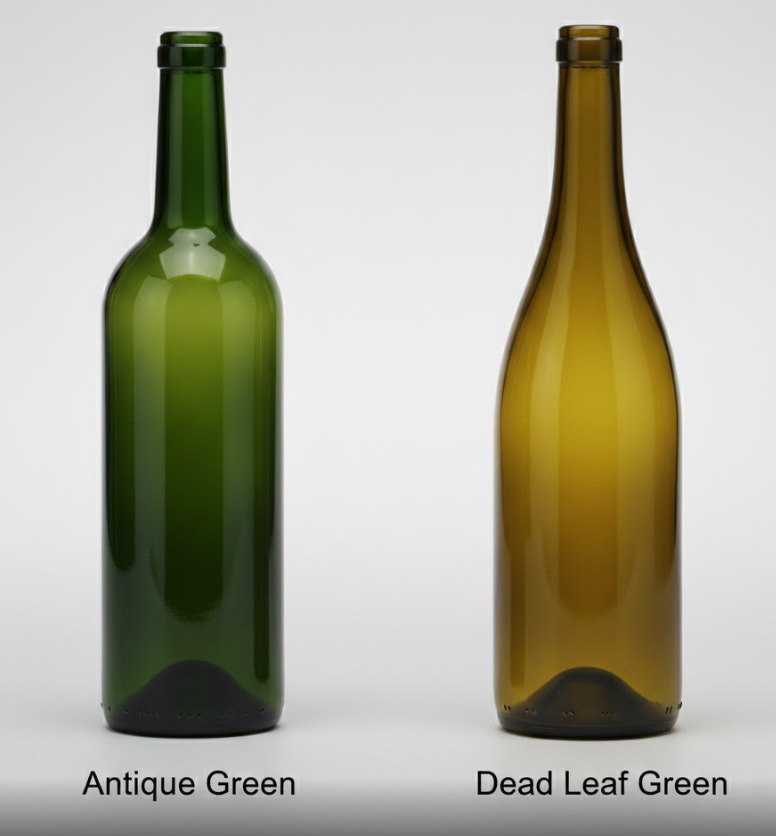
In contrast to Flint Glass, Antique Green Glass offers a deeper, more stable tone and is widely used for high-end red wine bottles designed for long-term aging. Its value goes beyond tradition and aesthetics—it provides essential light protection for wine. An even darker option, Dead Leaf Green, delivers stronger UV protection and is ideal for wines that demand maximum light shielding.
Jinpeng Glass Bottle uses professional coloring techniques combined with precise melting and mold processes to produce Antique Green bottles that are uniform in color, smooth in surface, and stable in mass production. We offer sizes from 250ml to 1500ml, with optional screen printing, spraying, and electroplating for premium surface finishes, fulfilling diverse branding needs.
4. Comparison of Crystal White, Antique Green, and Dead Leaf Green
Choosing the right Wine Bottle Glass color is essential for wine preservation, UV protection, and brand positioning. The comparison below helps wineries select the best glass bottle for different wine types and storage needs.
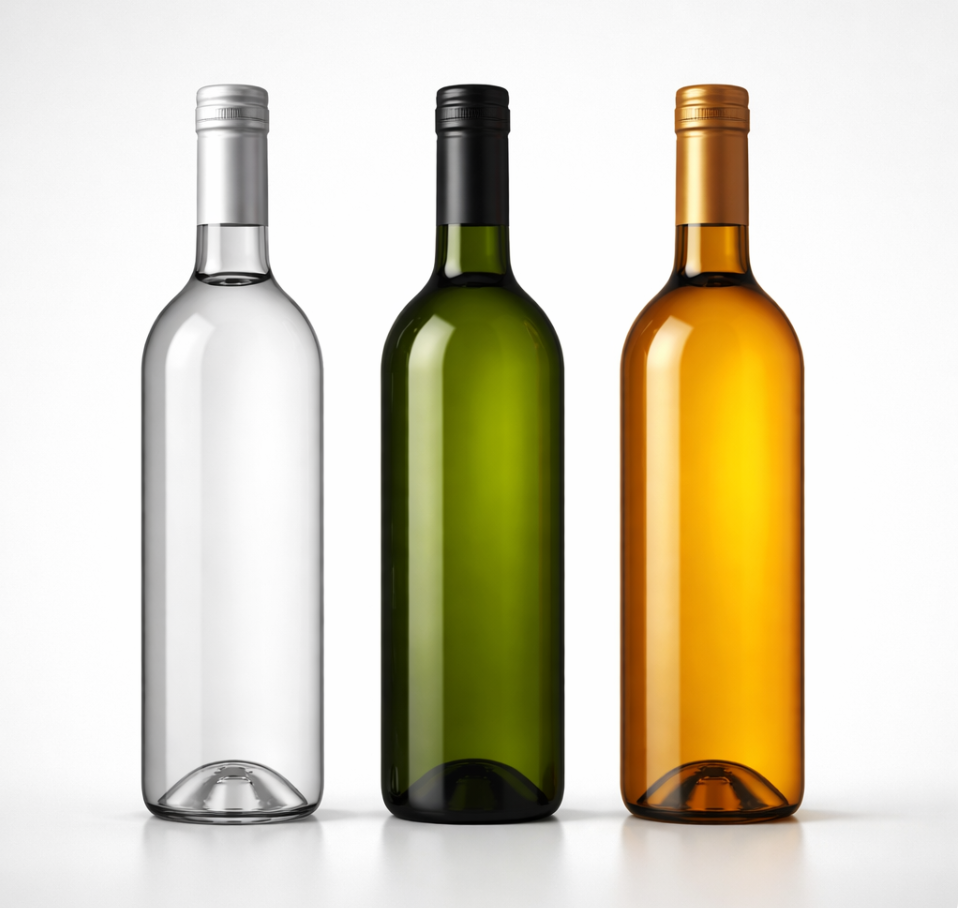
Wine Bottle Glass Color Comparison: Flint vs. Antique Green vs.Dead Leaf Green
| Feature | Flint Wine Bottle Glass (Crystal Clear) | Antique Green Wine Bottle Glass | Dark Olive Green Wine Bottle Glass |
|---|---|---|---|
| Color | Colorless, crystal-clear glass | Deep green, classic wine bottle glass | Dark olive green glass |
| UV Protection | Low UV protection | Medium to high UV protection | High UV protection |
| Light Transmission | Very high light transmission | Medium light transmission | Low light transmission |
| Best For | White wine, rosé, sparkling wine packaging | Red wine bottles, aged wine packaging | Premium red wine bottles, long-term aging |
| Storage Suitability | Short-term storage and fast turnover | Medium to long-term aging | Long-term cellaring and premium storage |
| Shelf Appeal | Modern, clean shelf presentation | Classic, premium wine bottle look | Luxury, cellar-style brand image |
Jinpeng Glass’s Color Matching Philosophy: Precision Control and Aesthetic Balance
At Jinpeng Glass, we do not merely manufacture glass bottles—we are color engineers. We understand that, for any brand, the color of its bottle is a vital component of its visual identity system. Therefore, we employ state-of-the-art spectrophotometers and colorimeters to precisely measure and control the color of each batch of glass, ensuring consistent and accurate L*a*b* values(the three dimensions in the CIE Lab color space representing lightness, red–green chromaticity, and yellow blue chromaticity respectively.)
5. Tips for Selecting the Right Bottle Color
As a professional glass bottle manufacturer, Jinpeng Glass Bottle provides end-to-end services from design to production:
- Function First: Select bottle color based on wine type and storage requirements.
- Aesthetic Design: Flint for modern, clean style; Antique Green for classic, premium positioning.
- Custom Finishes: Screen printing, spraying, and electroplating for differentiation.
- Global Production Capability: Daily output exceeding 50,000 bottles, supporting OEM ODM bulk production.
Conclusion
From Flint glass to antique green, the color of wine bottles is a blend of science, protective function, and brand storytelling. Choosing the right bottle color is not just about aesthetics; it reflects a commitment to wine quality and brand image.
As a leading global glass bottle manufacturer, Jinpeng Glass Bottles is committed to providing high-quality, customizable glass bottles that combine practicality and aesthetics, helping brands stand out on the shelves.
Click the link below to contact us and choose the perfect bottle for your wine!


