

Wine Bottle Glass for Modern Brands explains how color and quality shape premium packaging. Jinpeng Glass Bottle shares insights on custom glass bottles for wine and spirits brands.
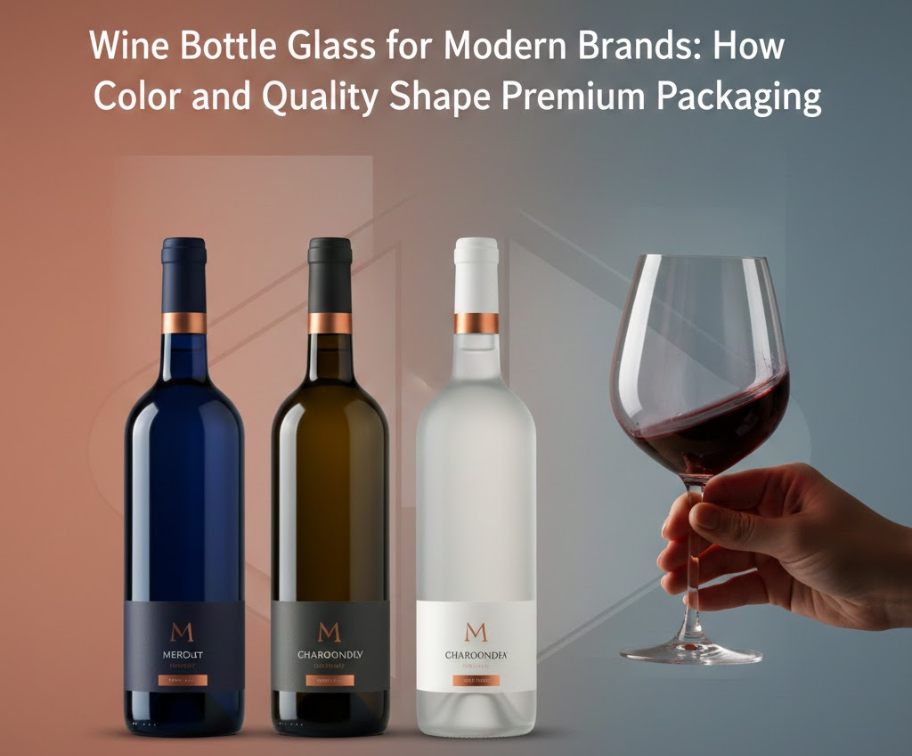
1.The Visual Cornerstone of Modern Brands:Logic Behind Wine Bottle Color Selection
- Flint Glass: Visual Marketing Through Transparency
Transparency is key for modern rosé and white wine brands. Jinpeng Glass’s “Ultra-Clear” flint glass bottles, through a rigorous chemical decolorization process (adding selenium and cobalt to neutralize iron elements), ensure a crystal-clear appearance under sunlight. This transparency not only enhances visual appeal but also conveys a brand message of “purity and freshness,” thereby increasing consumer purchasing desire. - Antique Green: Depth of Heritage and Protection
The deep antique green symbolizes heritage and protection, a classic choice for red wines. In consumers’ minds, it represents “aging potential” and “high quality.” Modern brands, by using antique green glass bottles, can imbue their wines with a sense of history and prestige, while simultaneously strengthening their professional image.
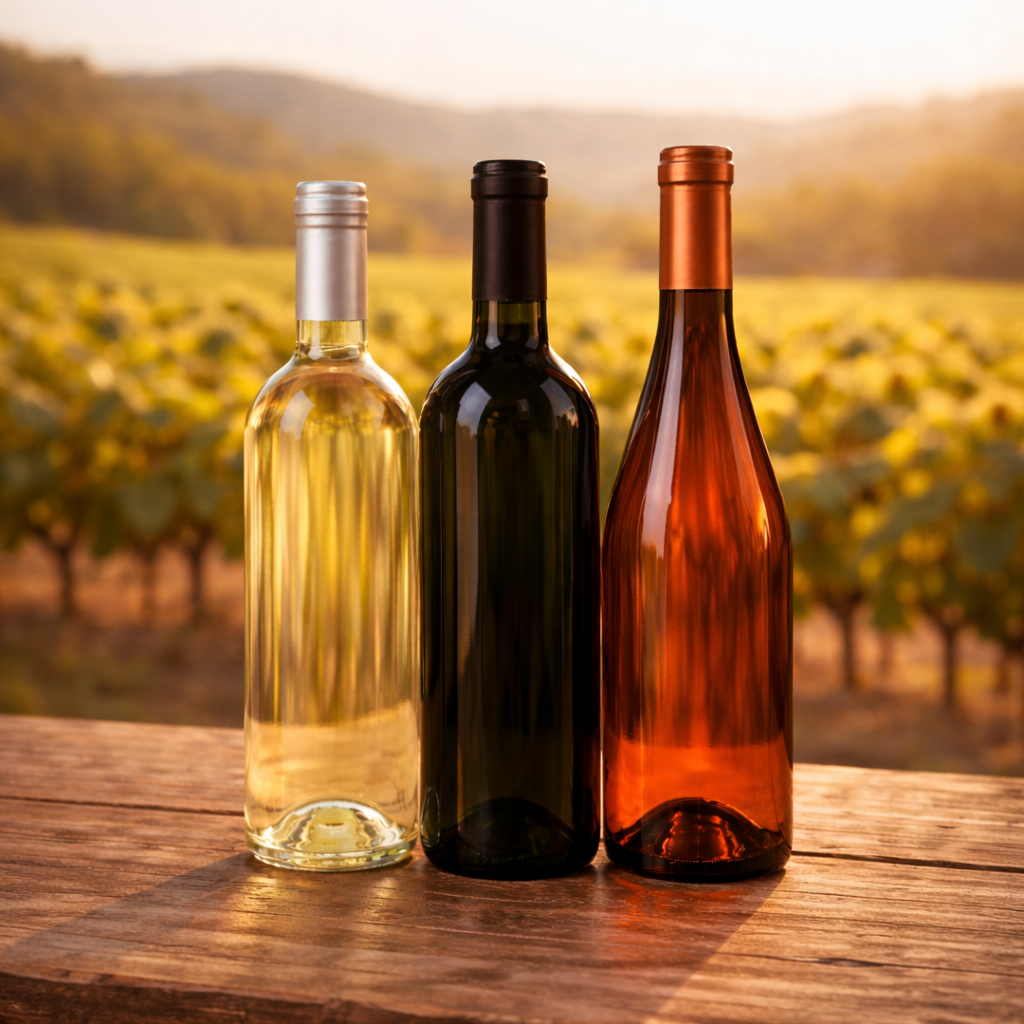
Color is not only a visual symbol but also a crucial vehicle for emotions and brand recognition.
Moreover, color-emotion research indicates that colors can elicit specific emotional responses, thereby influencing consumer decision-making
The Psychological Impact of Color in Glass Bottles
| Glass Color | Emotional / Brand Associations | Typical Applications |
|---|---|---|
| Clear | Pure, fresh, authentic | Modern wine, mineral water |
| Amber | Classic, stable, vintage | Craft beverages, artisanal wine |
| Blue / Green | Calm, refreshing, healthy | Natural mineral water, fruit-flavored wine |
| Dark Glass | Mysterious, premium, refined | Limited-edition wine / specialty beverages |
2.The Science of Protection: UV Filtration and “Light-Strike”
Modern brands often overlook the vulnerability of their product to light. Whether it’s an expensive Pinot Noir or a premium Glass Bottle Wine, light exposure can be catastrophic.
Understanding the “Light-Strike” Effect
UV light triggers a reaction between riboflavin (Vitamin B2) and amino acids in wine or sensitive sodas, producing sulfur compounds like dimethyl trisulfide. This results in an unpleasant “skunky” aroma.
Source: UC Davis Wine Quality Research
| Glass Color | UV Blocking Efficiency (<450nm) | Recommended Product |
| Flint (Clear) | 10% – 15% | Rosé, Gin, Clear Wine |
| Antique Green | 85% – 92% | Red Wine, Craft Beer |
| Amber/Brown | 95% – 98% | Champagne, Medicinal Spirits |
| Dead Leaf Green | 70% – 80% | Chardonnay, Light Reds |
3.How Quality Shapes the Premium Brand Experience
The “tactile quality” of a glass bottle comes not only from its appearance but also from its structure and details:
- Bottle Craftsmanship: Techniques such as embossing, frosted finishes, or special surface treatments further enhance tactile quality and visual depth. YEBODA GLASS
- Closure Design: Premium closures (e.g., high-quality metal caps) not only improve sealing but also elevate the overall user experience. jiahua-
- Weight and Feel: High-quality glass, being thicker and sturdier, provides a stronger sense of luxury. gca.com
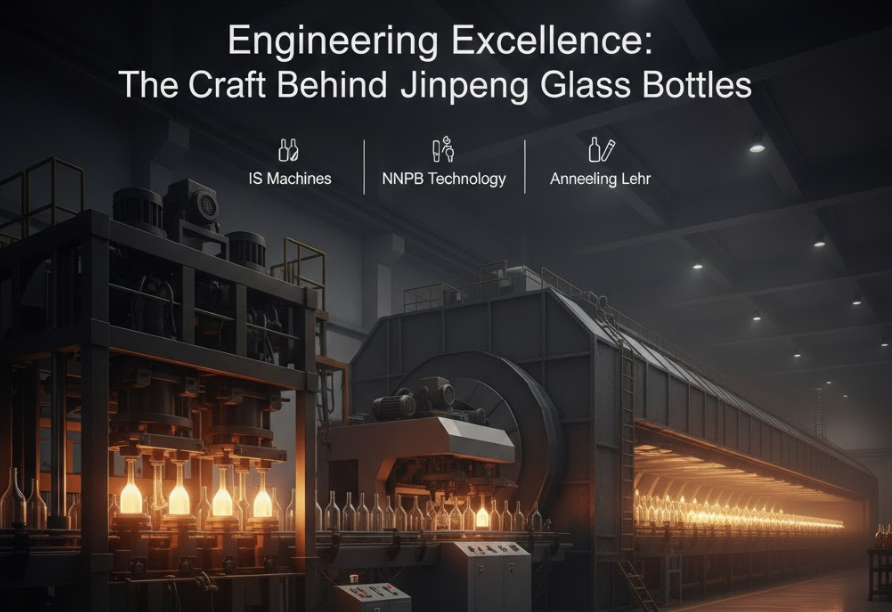
Engineering Excellence: The Craft Behind Jinpeng Glass Bottles
Premium packaging starts with precise craftsmanship. Jinpeng Glass ensures top-quality bottles through three key technologies:
- Individual Section Machines (IS Machines): Guarantee uniform wall thickness, keeping bottles strong and stable during stacking and transport.
- Narrow Neck Press & Blow (NNPB) Technology: Enables lightweight designs, reducing bottle weight by up to 15% without compromising strength, lowering shipping costs and carbon footprint.
- Annealing Lehr: Gradual, even cooling eliminates internal stress, ensuring bottles run safely and reliably on high-speed filling lines.
4.Modern Craftsmanship: The Revolution of Lightweighting and NNPB Technology
Modern brands in 2026 focus not only on beauty but also on sustainable development.
Lightweighting
- By adopting NNPB (Narrow Neck Press and Blow) technology, Jinpeng Glass can reduce bottle weight by 15%-20% while maintaining the strength of the bottle body.
- This reduces raw material consumption and significantly lowers the brand’s global transportation carbon footprint.
- Logistics Advantage: Lighter bottles mean each shipping container can transport more units.
- Eco-Premium: Modern consumers are more willing to pay a premium for packaging with environmental labels.
5.Quality Control: Jinpeng Cold End Inspection System
Every bottle leaving the Jinpeng factory undergoes rigorous “cold end” inspection.
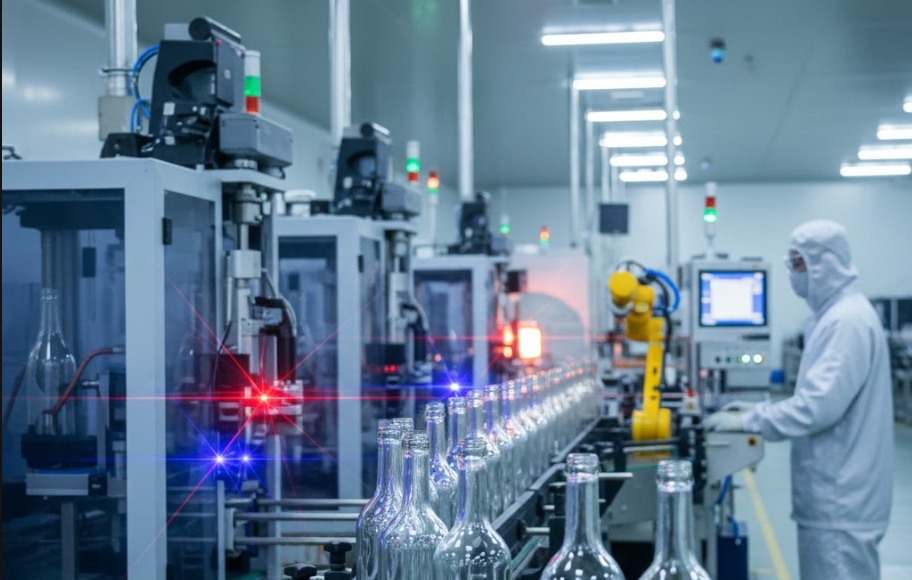
- Laser scanning: Automatically detects tiny cracks.
- Wall thickness inspection: Ensures stability under physical impact.
- Visual inspection: Guarantees no stones or bubbles in the glass.
- For more details, click the left button.
Conclusion: Let Your Bottle Speak for Your Brand
Today, wine bottle glass is more than just a container—it’s a stage for light and shadow, a symbol of quality, and a pledge to sustainability.
At Jinpeng Glass Bottle, we combine precise color mastery with uncompromising craftsmanship to deliver packaging solutions that elevate modern wine brands worldwide.
From the sparkling clarity of flint to the sophisticated depth of antique green, every bottle becomes a storyteller, letting your fine wine shine and speak for itself on the shelf. Make your brand unforgettable—one bottle at a time.
Want to learn more about the manufacturing process of high-quality wine bottles? Follow or check out our latest custom projects on TikTok.


