

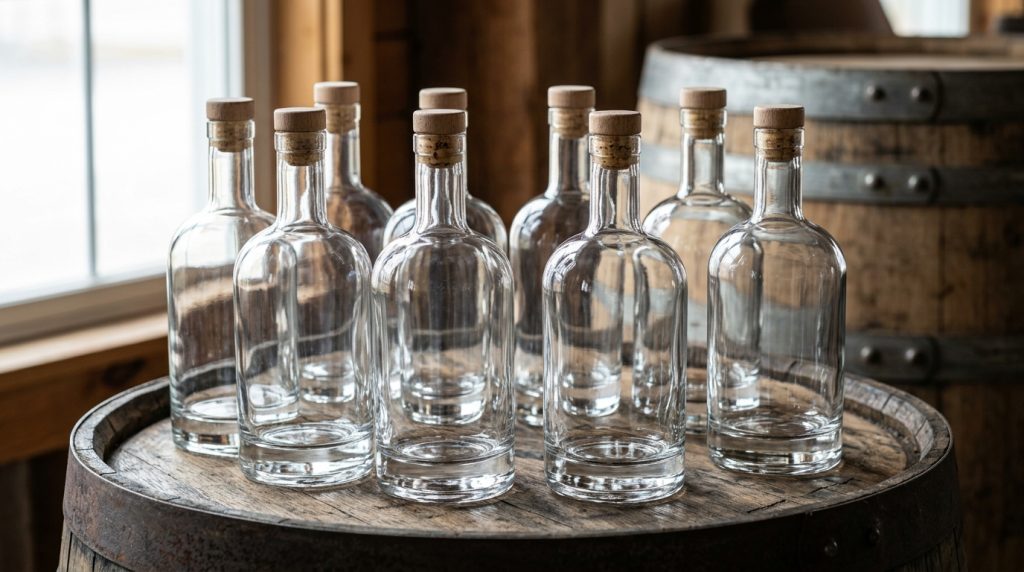
If your juice is the best kentucky bourbon on the market, it needs a bottle that proves it before the cork is even popped. In the highly competitive spirits industry, choosing the right bourbon bottles secures the first purchase and protects your margin.
The Psychology of the Pour: Why Heavy Glass Wins
When consumers shop for a top shelf bourbon, they aren’t just buying alcohol; they are buying an experience. They are buying the clink of the glass, the pop of the cork, and the physical weight of the pour.
In the packaging world, weight equals perceived value. The thick glass base at the bottom of liquor bottles is called the “sham.” A heavy sham does two things: it prevents the bottle from tipping over easily, and it tricks the human brain into associating the product with luxury.
Have you ever picked up a cheap bottle of blended whiskey? It feels light, flimsy, like a soda bottle. Now pick up a premium bourbon. It feels like a weapon. That tactile feedback is intentional.
But heavy glass comes at a cost. It requires more raw material (silica sand, soda ash, limestone), takes longer to cool and anneal in the glass factory, and weighs more on a pallet, driving up your freight costs. As a B2B buyer, your job is to find the sweet spot between a premium heavy feel and a unit cost that doesn’t destroy your margin.
Furthermore, the distribution of that glass weight matters. Poorly manufactured bottles will have uneven shams, meaning the glass is thicker on one side of the base than the other. This not only looks sloppy but can cause structural weaknesses on the bottling line. When you are evaluating samples, flip the bottle over and look at the bottom. A perfectly even sham is a sign of a factory that controls its mold temperatures and gob weight meticulously.
Anatomy of the Perfect Bourbon Bottle
You don’t have to reinvent the wheel. Classic silhouettes have dominated the bourbon market for a reason. They convey history, they fit well on a retail shelf, and they run smoothly on high-speed filling lines.
The Classic Cylindrical (The “Round”)
Tall, straight walls. Easy to label. Efficient to pack in corrugated boxes. This is the workhorse of the bourbon industry. It is cost-effective and provides a large canvas for paper labels or direct screen printing. From an operational standpoint, round bottles rotate easily in a labeling machine, minimizing misapplied labels and reducing downtime.
The Flask / Oval
Historically tied to the Prohibition era and bootlegging, the flask shape is ergonomic. It fits in a hand (or a boot). Many heritage brands still use a variation of the flask for their core expressions. However, oval bottles require a “centering lug” (a small notch at the base of the glass) so the labeling machine knows exactly where the front of the bottle is before applying the label.
The Decanter Style
Short, stout, with a massive sham and a prominent stopper. These are typically reserved for a limited edition bourbon or high-age statement releases. They dominate the top shelf because they literally demand more horizontal space. If you want to see some wild examples of structural design pushing the limits, check out these amazing alcohol bottles that break the traditional mold. Decanters are notorious for being difficult to label and pack, often requiring hand-application of labels and custom foam or rigid box packaging.
Standard Molds vs Custom Molds: The Ultimate Showdown
When you are sourcing bourbon bottles, you face a critical decision early on: do you buy an off-the-shelf standard bottle, or do you invest in a proprietary custom mold?
If you are a startup distillery bleeding cash on barrels and equipment, standard molds keep you alive. If you are an established brand fighting for legacy status, a custom mold is your moat against competitors.
Here is a breakdown of how the two approaches compare in the real world of B2B purchasing.
| Feature | Standard Mold (Off-the-shelf) | Custom Mold (Proprietary) |
|---|---|---|
| Mold Cost | $0 (Already amortized by manufacturer) | $3,000 – $10,000+ depending on complexity |
| Lead Time to First Run | Fast (2-4 weeks if in stock) | Slow (3-6 months for design, sampling, and production) |
| Minimum Order Quantity (MOQ) | Low (Often 1 pallet / ~1,000 bottles) | High (Usually 20,000 – 50,000+ bottles) |
| Brand Identity & Exclusivity | Low (Competitors can use the exact same bottle) | High (100% unique to your brand) |
| Embossing/Debossing | Not possible on the glass itself | Fully customizable (Logos, text, patterns) |
| Bottling Line Integration | Known variables, easy to run | Requires custom change parts on the line |
If you decide that a custom shape is the only way to tell your brand story, you need to partner with a factory that actually understands spirits packaging, not just jelly jars. A reliable custom whiskey glasses manufacturer will guide you through the 3D modeling, acrylic prototyping, and trial runs to ensure your custom bottle actually runs efficiently on your bottling line without jamming or tipping.
Glass Clarity: Flint vs. Super Flint
Bourbon is a visually stunning liquid. The deep amber, copper, and mahogany hues are developed over years of resting in charred oak. Why would you put that liquid in cloudy, greenish glass?
In the glass industry, clarity is categorized by grade.
– Standard Flint Glass: Used for beer, food jars, and lower-tier spirits. It often has a slight greenish or grayish tint due to iron impurities in the sand.
– Super Flint (Extra Flint) Glass: The gold standard for premium liquor bottles. The raw materials are highly refined, resulting in crystal-clear glass that allows the true color of the bourbon to shine through.
If you are bottling a top shelf bourbon, demand Super Flint glass from your supplier. The unit cost is marginally higher, but the optical clarity is non-negotiable for premium spirits. Beyond just raw material purity, the annealing process (controlled cooling of the glass) must be flawless. If bottles are cooled too quickly, internal stress builds up, leading to thermal shock fractures when the bottle is washed or filled on your line.
The Closure: Why Cork Still Rules the Roost
Screw caps (ROPP finishes) are fantastic for wine and lower-proof spirits. They are cheap, hermetic, and easy to apply mechanically.
But for kentucky bourbon whiskey, the bartop cork finish is the undisputed king.
Consumers have a deeply ingrained Pavlovian response to the “pop” of a cork being pulled from a heavy glass bottle. It signals tradition, craft, and quality. You can use natural cork, synthetic micro-agglomerate cork (which prevents cork taint and breakage), or glass stoppers.
The most important engineering detail here is the bore profile of the bottle neck. If the inner diameter of the neck is inconsistent, your corks will either fall in, back out, or leak in transit. This is a common issue with low-tier glass factories that don’t control their neck rings properly. Always ask your supplier for the exact dimensional tolerances of the neck finish and ensure your cork supplier matches those specs perfectly.
Navigating the Global Supply Chain for B2B Buyers
Let’s talk business. Sourcing bottles domestically in the US is getting harder and drastically more expensive. The major North American glass conglomerates demand massive volume commitments and routinely push small-to-medium distilleries to the back of the line.
Many craft and mid-sized distillers have turned to overseas manufacturing to secure their glass liquor bottles. The advantages are clear:
1. Access to highly affordable custom molds (often a fraction of domestic costs).
2. High-quality Super Flint glass availability.
3. Turnkey decoration services (frosting, spraying, decals) done at the factory before shipping, eliminating the need for a secondary co-packer.
The challenge is logistics. Shipping empty glass means you are effectively paying to ship air across the ocean. To make overseas sourcing work, you must order in full container loads (FCL), typically 40ft High Cube containers to maximize space. You also need to factor in a 6-to-8 week lead time for ocean freight, plus customs clearance.
According to data from the Kentucky Distillers’ Association, the bourbon industry is experiencing historic, multi-billion dollar expansions. Production is scaling up rapidly. If you don’t forecast your bottle inventory 6 months in advance, you will end up with mature whiskey sitting in tanks because you have nothing to put it in. Supply chain resilience is just as important as glass clarity.
Labeling and Decoration: The Final Touch
A great bottle is naked without the right label. The texture and application of your branding are just as important as the glass mold itself. It is the final millimeter of the customer journey.
- Paper Labels: High-quality, textured paper (like Estate #8) with foil stamping and high-build tactile varnish can make a standard bottle look like a million bucks.
- Applied Ceramic Labeling (ACL) / Screen Printing: Printing the label directly onto the glass provides a modern, seamless look. It won’t peel or wrinkle if the bottle gets cold or wet behind a bar.
- Embossing: As mentioned, custom molds allow you to emboss your distillery name or logo directly into the glass. It provides incredible tactile feedback when the bartender grabs the bottle.
- Electroplating and Frosting: Usually reserved for vodka or tequila, but we are starting to see aggressive, modern bourbon brands use matte black frosting or metallic plating to stand out in a sea of clear glass.
Always make sure your bottle design includes a “label panel”—a slightly recessed or perfectly flat area on the glass. If the glass bows or curves too sharply, your paper labels will wrinkle on the bottling line, causing massive headaches, rejected units, and wasted material. A good glass supplier will provide a mechanical drawing highlighting the safe zone for labeling.
The Future of Premium Bourbon Packaging
The spirits industry is under increasing pressure to adopt sustainable practices. The Distilled Spirits Council of the United States (DISCUS) frequently highlights the industry’s shift toward environmental responsibility and carbon reduction.
There is a growing tension between the desire for premium, heavy glass and the need for “lightweighting” to reduce carbon footprints in freight. Some legacy brands are beginning to shave ounces off their glass weight, optimizing the punt (the indentation at the base) to maintain the illusion of size while using less material.
However, in the ultra-premium segment, heavy glass remains the standard. The compromise we are seeing is a shift toward using more Post-Consumer Recycled (PCR) glass in the mix, even for Super Flint bottles, and designing bottles with secondary lifespans (like decanters that consumers keep and reuse indefinitely).
Frequently Asked Questions (FAQ)
What makes a bottle specifically a bourbon bottle?
Legally, nothing. A bourbon bottle is simply a container that holds bourbon. However, industry norms dictate that bourbon bottles usually feature heavy shams, broad shoulders, and bartop cork finishes to convey heritage and premium quality. The classic “round” and “flask” are the two most recognizable silhouettes.
How much does a custom glass mold cost for liquor bottles?
Depending on the manufacturer and the complexity of the design, a custom mold can cost anywhere from $3,000 to $10,000+. Overseas manufacturers generally offer much lower mold costs compared to domestic US factories, making custom designs highly accessible to smaller, growing brands.
What is the typical lead time for custom bourbon bottles?
From the initial 3D design approval to receiving the first mass-production run, you should expect a timeline of 3 to 6 months. This includes mold creation, sample production, revisions, full production, and ocean freight transit times.
Can I use standard glass liquor bottles for a premium release?
Absolutely. Many highly respected, high-proof, and limited-edition bourbons use standard cylindrical or flask-style bottles. The premium feel is achieved through heavy glass weight (Super Flint), high-end textured labels, foil stamping, and custom closures like wax dipping or premium wood stoppers. The execution matters more than the exclusivity of the mold.
Conclusion
The liquid inside the barrel is your craft, but the glass that holds it is your business.
Sourcing the right bourbon bottles is a delicate balancing act of unit economics, supply chain logistics, line efficiency, and brand psychology. Whether you are launching a flagship kentucky bourbon whiskey in a reliable standard round, or dropping a $200 limited edition bourbon in a massive, custom-embossed decanter, the glass dictates the narrative on the retail shelf.
Stop treating your packaging as an afterthought. Invest in Super Flint glass, design for the limitations of your bottling line, and partner with a B2B manufacturer who understands that they aren’t just making glass containers—they are building the armor for your brand. When the glass speaks, the consumer listens.


